








Article: Brown Colour Poop: Normal Stool Colour and What It Means for Gut Health
Brown Colour Poop: Normal Stool Colour and What It Means for Gut Health
Brown stool, in any shade from light tan to dark brown, is the normal and healthy colour for adult poop and usually means your digestion is working as it should. Stool is brown because bile from the liver carries a yellow pigment called bilirubin, which gut bacteria turn into brown pigments. Changes to watch for include a shift to pale or clay, black and tarry, red, or yellow and greasy, as well as hard, watery, or very thin stool that lasts more than a few days.
That brown colour is made by your gut bacteria. A 2024 study found the bacterial enzyme that starts turning bilirubin into the pigment behind brown stool, and it was present in nearly all healthy adults. It was less common in newborns and in people with inflammatory bowel disease. Colour can also work as an early warning. In a Taiwan study of 78,184 babies, parents compared their babies' poop with a simple stool colour card. The card picked up 26 of the 29 babies who had a serious bile duct disease before they were 2 months old.
So brown is a good sign, but it is only part of the picture. The shade, the shape and how easily stool passes also tell you how your gut is doing.
Why Is Poop Brown in Colour?
Poop is brown because of what happens to bile and old red blood cells inside your gut. It happens in four steps.
- Old red blood cells break down: Your body replaces red blood cells all the time. When old ones break down, they leave a yellow pigment called bilirubin.
- The liver puts bilirubin into bile: Bile is a yellow-green fluid that helps you digest fat. Your liver makes about 500-600 ml of bile every day, and it is stored in the gallbladder.
- Bile enters the gut when you eat: The gallbladder squeezes bile into the duodenum, the first part of the small intestine.
- Gut bacteria change its colour: In the large intestine, bacteria turn bilirubin into new pigments. One of them, stercobilin, gives stool its brown colour.
The 2024 study found that the enzyme behind step 4 comes mostly from one large group of gut bacteria called Firmicutes.
This is why stool colour depends on two things: how much bile reaches your gut and how long it stays there. If bile is blocked, stool turns pale. If stool moves too fast, bile has no time to change, so stool can look green or yellow. Antibiotics can also cut down the bacteria that make the brown pigment, so stool may look green for a while.
What a Normal Stool Is Made Of, If You Follow Healthy Food and Routine?
Food leftovers make up less of your stool than most people think. A large review of studies on human stool found that:
- About 74.6% of stool is water
- Gut bacteria make up 25-54% of the solid part
- The rest is undigested carbohydrate, fibre, protein and fat
- Healthy adults pass a median of 128 g of stool a day, about 1.2 times a day
- People who eat high-fibre diets pass about twice as much stool as people on low-fibre diets
Stool also holds mucus, cells shed from the gut lining and bile. So what gives stool its brown colour is not mainly the food you eat. It is the bile pigments that bacteria change as they pass through your gut. Food can tint the colour, but the base brown comes from inside your body.
Shades of Normal Brown Stool
Normal brown stool can be any shade from light tan to dark chocolate. The shade can change from day to day with what you eat and how much bile is in your stool.
- Greenish brown: Spinach, kale and other leafy greens, green food colouring or iron tablets. This is normal.
- Orange or yellowish brown: Carrots, sweet potatoes, pumpkin and other foods rich in beta-carotene.
- Reddish brown: Beetroot, tomato soup and red drinks or sweets with food colouring.
- Dark brown: Dark foods, iron tablets or not drinking enough water.
One odd shade after a meal is not a concern. Your stool should go back to its usual brown once that food has passed.

Iron tablets can push stool from dark brown to very dark green or even black. This is a known side effect and is not harmful on its own. But call your doctor if the stool also turns sticky or tarry, or shows red streaks.
Babies are different. Newborn poop is black and sticky for the first few days, and breastfed babies often pass yellow stool. Both are normal. But pale, white or clay-coloured stool in a baby needs a doctor quickly. After Taiwan gave stool colour cards to all parents, very late referrals for that bile duct disease fell from 9.5% to 4.9%.
Light Brown Stool and Dark Brown Stool
Both light and dark brown are usually normal. What matters is whether the shade is new, how long it lasts and what else comes with it.
|
What to check |
Light brown stool |
Dark brown stool |
|
What it looks like |
Tan or sandy brown |
Deep brown, close to dark chocolate |
|
Common food reasons |
A lot of dairy or pale, low-fibre meals |
Dark foods such as blueberries, dark leafy greens or dark beer |
|
Common medicine reasons |
Some diarrhoea medicines, or barium you drink before an X-ray |
Iron tablets and medicines with bismuth, such as Pepto-Bismol |
|
Gut speed |
Stool that moves fast, as in loose motions, gives bile less time to darken |
Stool that moves slowly, as in constipation, has more time to darken and dry out |
|
Water intake |
Not usually linked |
Too little water can make stool darker and harder |
|
When it may be a problem |
Very pale, grey or clay-coloured stool can mean bile is blocked by a liver, gallbladder or pancreas problem |
Black, sticky, tar-like stool can mean bleeding in the food pipe, stomach or upper small intestine |
|
Signs that may come with it |
Yellow skin or eyes, belly pain, or greasy stool that floats |
Dizziness, weakness, belly pain or vomiting blood |
|
What to do |
Watch it for a few days. See a doctor if it stays pale or comes with yellow skin or eyes |
Drink more water and eat more fibre. See a doctor the same day if it turns black and tarry |
Stool Changes to Watch
A change from your usual brown that lasts more than a few bowel movements or comes with other symptoms needs a closer look.
Colour changes
- Pale, white or clay: This usually means too little bile is reaching your gut. Causes include hepatitis, gallstones, blocked bile ducts, cysts or tumours. Barium and some medicines can also cause it.
- Black and tarry: This can be a sign of bleeding high up in the gut, such as from a stomach ulcer. Iron tablets, bismuth medicines, blueberries and black liquorice can also turn stool black without any harm.
- Bright red: The colour can mean bleeding lower down, from piles, a small tear near the anus, polyps, inflammation of the colon, diverticular disease or cancer. Beetroot and red food colouring can also look similar.
- Yellow and greasy: Stool with too much fat can look yellow, oily and smell terrible. Coeliac disease and pancreas problems are common causes. An expert review by the American Gastroenterological Association lists fatty stool, weight loss, bloating and excess gas as signs that the pancreas is not making enough digestive enzymes.
- Green: Usually from leafy greens, food colouring, iron tablets, antibiotics or stool moving too fast. Green diarrhoea with fever or belly pain can indicate an infection.
- Orange: Usually from beta-carotene foods. Some antibiotics and antacids with aluminium hydroxide can also cause it.
Other changes
- Shape: Hard lumps or watery stool on most days
- Size: Stool that becomes much thinner than usual
- Floating: Healthy stool usually sinks. Stool that floats often may hold too much gas or fat that was not absorbed, especially if it looks greasy and is hard to flush
- Smell: Some smell is normal, and meat, garlic, dairy, broccoli and cabbage can make it stronger. A very foul smell that lasts more than a few days needs a check-up.
- Blood or mucus: Blood on the tissue paper or in the toilet
Brown Poop Meaning for Gut Health

Brown poop means bile is reaching your gut and your gut bacteria are doing their job. But colour says little about how well stool moves, so check the shape too.
Doctors use the Bristol Stool Chart for this. Types 3 and 4, shaped like a sausage and soft or smooth, are the healthy types. Types 1 and 2 are hard and lumpy and point to constipation. Types 5, 6 and 7 are soft blobs, mushy pieces or liquid and point to diarrhoea.
Shape tells you more than you might expect:
- In a study of 66 volunteers, stool shape matched how fast food moved through the gut better than how often people went to the toilet.
- In a study of 53 healthy women, looser stool was linked with fewer kinds of gut bacteria.
- In a study of 863 healthy adults who ate a blue food dye to time their gut, the time it took to pass the dye was linked with the mix of gut bacteria, and this link was stronger than for stool shape or frequency.
How often you go also varies. A Swedish study of healthy adults found that 98% went anywhere from 3 times a day to 3 times a week.
Research by ZanduCare shows that going every day does not mean your gut is fine. Among people who use the bathroom daily, nearly 1 in 2 still struggle to complete a bowel movement. Among people who eat fermented foods, more than half still do not have consistently smooth, easy stools.
What you eat and drink also changes how brown stool looks and feels:
- Water: Too little water makes stool dry, darker and harder to pass.
- Fibre: Fruits, vegetables and whole grains add bulk and hold water, which keeps stool soft. Fibre works best when you also drink enough water.
- Caffeine: Coffee and tea can push the colon to move faster, so stool may come out looser.
- Sugar-free sweets: Sugar alcohols like sorbitol and xylitol are not digested. They pull water into the gut and can cause loose stool.
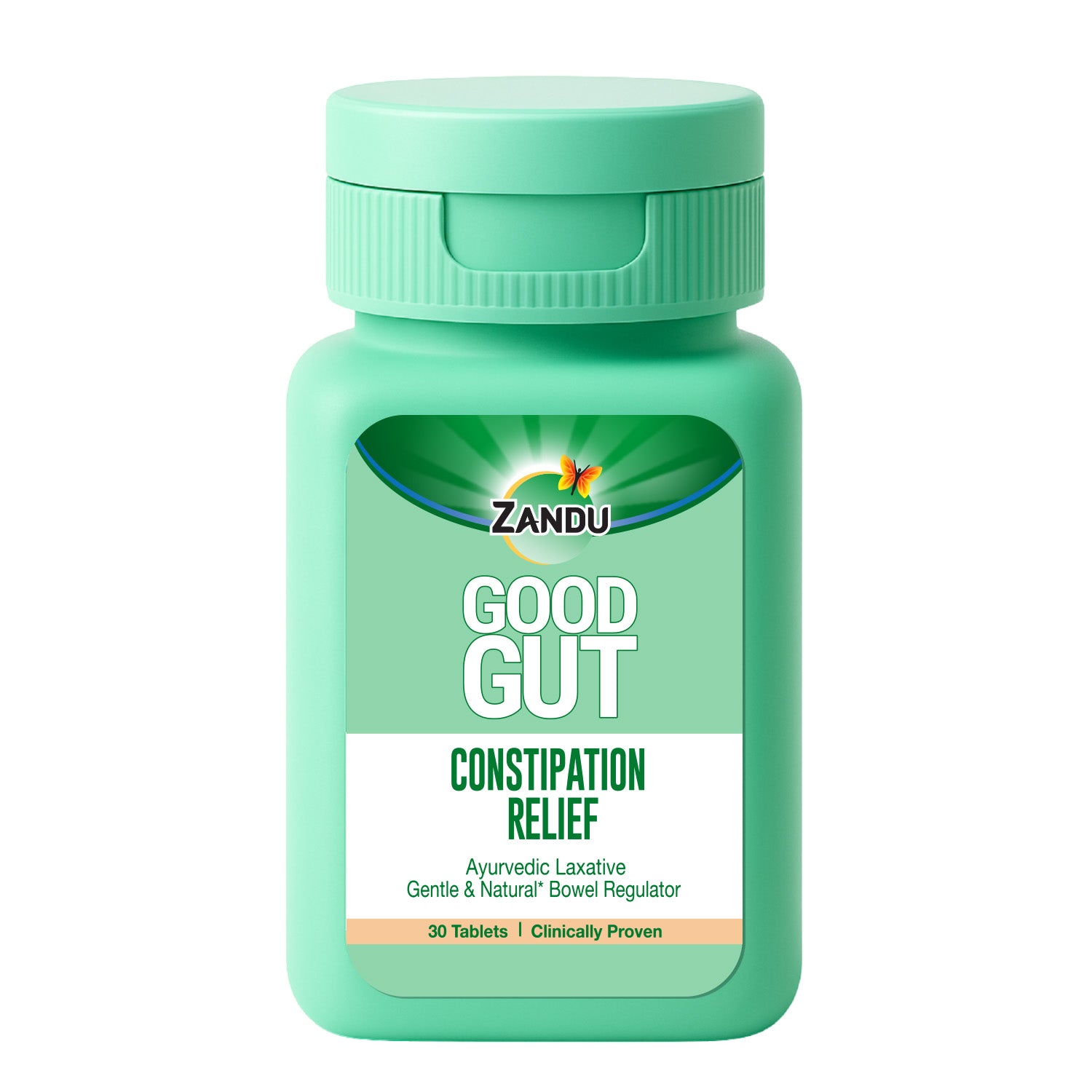
If your stool is brown but hard, lumpy or difficult to pass, Zandu Constipation Relief Tablets, made with 8 Ayurvedic herbs, are taken as one tablet at bedtime and are not habit-forming. Do not use them to hide warning signs like pale, black or bloody stool.
When to See a Doctor
One or two odd-coloured stools are usually due to food or medicine. But a change that lasts, or comes with other symptoms, should be checked. See a doctor if you notice any of these:
- Pale, grey, white or clay-coloured stool
- Black or tarry stool, or red stool you cannot link to food
- Blood on the tissue paper
- Greasy, foul-smelling stool that is hard to flush
- A colour that does not return to brown after a few days, or after you stop a new medicine
- A sudden change in how often you go, or constipation or diarrhoea that keeps coming back
- Diarrhoea with fever, nausea or vomiting
- Belly pain, tiredness or weight loss along with stool changes
- Stool that is much thinner than usual
- Yellow skin or eyes
Go to an emergency room if there is a lot of blood or clots in your stool, or if black, tarry stool comes with dizziness or fainting.
Conclusion
Brown stool, from light tan to dark brown, is normal and shows that bile is reaching your gut and your gut bacteria are turning it brown. Food, water and medicines can shift the shade for a day or two. Watch for stool that turns pale, black, red, or yellow and greasy, or that becomes hard, watery or thin for more than a few days. If any of these changes last or come with pain, fever, weight loss or yellow skin, see a doctor.
References
These are the studies and medical sources used in this article.
- BilR is a gut microbial enzyme that reduces bilirubin to urobilinogen.
- Screening for biliary atresia by infant stool color card in Taiwan.
- Stool color card screening for biliary atresia.
- The Characterization of Feces and Urine: A Review of the Literature to Inform Advanced Treatment Technology.
- AGA Clinical Practice Update on the Epidemiology, Evaluation, and Management of Exocrine Pancreatic Insufficiency: Expert Review.
- Stool form scale as a useful guide to intestinal transit time.
- Stool consistency is strongly associated with gut microbiota richness and composition, enterotypes and bacterial growth rates.
- Blue poo: impact of gut transit time on the gut microbiome using a novel marker.
- Assessment of normal bowel habits in the general adult population: the Popcol study.
- What Does My Stool (Poop) Colour Mean?
- Healthline. Why Is Poop Brown?
- What Do Different Poop Colours Mean?
- Bristol Stool Chart.
Written by

Zanducare
India’s trusted name in Ayurvedic wellness, offering time-tested solutions for today’s health and lifestyle needs. With formulations rooted in classical Ayurvedic texts and crafted using pure natural ingredients, we bring holistic care into your everyday routine.
Research by


Leave a comment
This site is protected by hCaptcha and the hCaptcha Privacy Policy and Terms of Service apply.