











Black Colour Poop: Causes, Risks, and What Your Stool Indicates
Black stool causes range from harmless ones like iron tablets and bismuth medicines such as Pepto-Bismol and dark foods like blueberries or black liquorice, to bleeding in the food pipe, stomach or upper small intestine. Food or medicine usually leaves stool dark but formed, with a normal smell, and it turns brown again once you stop; bleeding gives sticky, tar-like, foul-smelling stool, and you need urgent care if it comes with vomiting blood, dizziness, fainting, a racing heart or breathlessness.
It takes less blood than most people think. In one study, healthy volunteers swallowed their blood. After 300 ml, every one of them passed black stool. After just 100 ml, 71% of the volunteers still passed black stool. A large review of emergency patients found that black stool seen during a check-up was one of the strongest signs that bleeding was coming from the upper gut. On the harmless side, a review of 35 trials with 4,763 patients found that bismuth medicines made dark stool about five times more likely, without any serious side effects.
So the colour alone does not tell you the cause. The look, the smell, what you ate and how you feel give a clearer picture.
Why Does Your Stool Turn Black?

Normal stool is brown because of bile, a yellow-green fluid made by the liver. When stool looks black, something has darkened it on the way.
- Blood: Blood from the food pipe, stomach or the first part of the small intestine (duodenum) gets digested on its long trip down. Gut juices turn it black and sticky. Doctors call this melena.
- Bismuth: Bismuth mixes with sulphur in your saliva and gut. This forms bismuth sulphide, a black substance that leaves the body in stool.
- Iron and dark foods: Iron that the body does not absorb and dark pigments from some foods stain the stool as it passes.
Blood from lower down, like the large intestine or rectum, has less distance to travel. So it usually looks red, not black.
How to Tell the Difference Between Black Stool Caused by Food, Medicine or Bleeding
These signs can point you in the right direction, but only a stool test can confirm blood.
|
Sign |
Food or medicine |
Possible bleeding |
|
Colour |
Dark green to black, sometimes patchy |
Jet black and shiny, like tar |
|
Texture |
Formed and normal |
Sticky and tarry, sometimes loose |
|
Smell |
Your usual smell |
Very strong, foul smell from digested blood |
|
Recent trigger |
You ate dark foods or took iron, bismuth or charcoal |
No food or medicine that explains it |
|
How long it lasts |
Fades a few days after you stop the cause |
Continues or keeps coming back |
|
Other gut symptoms |
Usually none, maybe mild constipation or an upset stomach |
Belly pain, vomiting blood or vomit that looks like coffee grounds |
|
How you feel |
Your normal energy |
Dizzy, weak, pale, breathless or with a racing heart |
|
Medicines that raise risk |
Not a factor |
Regular painkillers like ibuprofen, aspirin or blood thinners |
|
Health history |
No known gut or liver problem |
Past ulcer, liver disease or heavy drinking |
|
Black specks only |
Often seeds or skins from blueberries or black beans |
Dark brown, coffee-ground-like bits can mean older blood |
|
Stool blood test |
Negative |
Positive |
|
What to do |
Watch it and stop the trigger |
See a doctor the same day |
Foods That Cause Black Stool & That’s Normal
Some dark foods and drinks can stain stool for a short time. The colour fades once the food has passed through your system.
These include:
- Black liquorice
- Blueberries
- Blood sausage
- Grape juice
- Dark beer
- Chocolate sandwich cookies
- Dark leafy greens
- Foods and drinks with artificial colouring
Beetroot and red food colouring usually make stools look reddish, not black. Such stool can look like blood, so mention it to your doctor if you are unsure.
Small black specks in otherwise brown stool are often undigested skins of blueberries or black beans. Mild dehydration can also make stool darker brown and harder. But it does not make stool black, sticky and tarry. That pattern points more towards bleeding.
Relation of Iron Supplements and Black Stool

Iron tablets are one of the most common reasons for black or very dark green stool. This is a known side effect that is not harmful on its own.
Iron tablets can also cause other gut problems. A review of 43 trials with 6,831 adults found that ferrous sulphate, the most common iron tablet, more than doubled the odds of gut side effects compared with a dummy pill. These include constipation, diarrhoea, nausea and heartburn. If they bother you, your doctor may suggest a different type of iron.
Iron does not affect a stool blood test. In one study, 25 healthy people took 900 mg of ferrous sulphate a day, and none of their stool blood tests turned positive. In another, 78 volunteers took iron for two weeks, and again no test was positive. So if your stool test shows blood while you are on iron, the iron is not the reason.
Call your doctor if your stool on iron becomes tarry or sticky, or if you see red streaks in it.
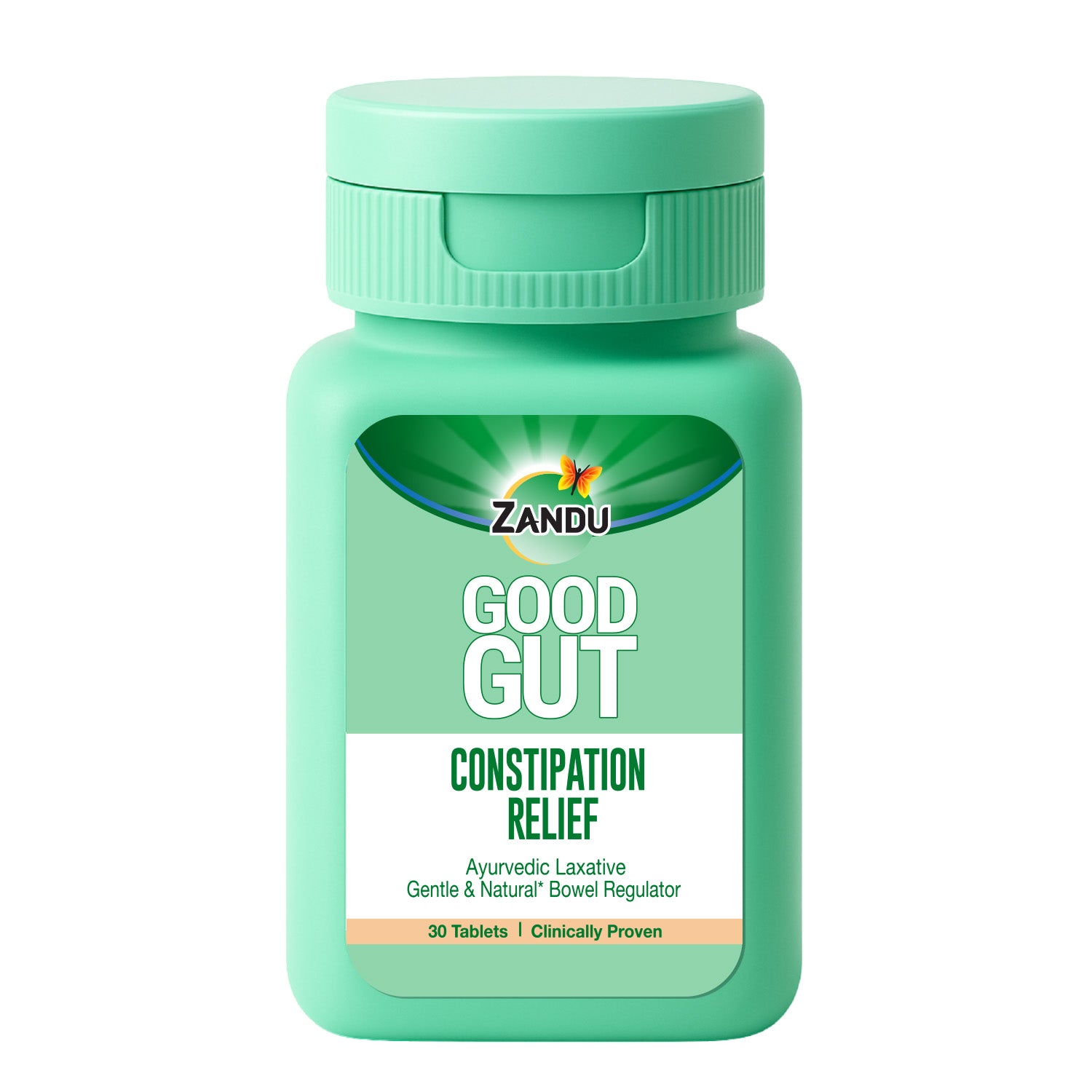
If iron tablets leave you with hard stool and straining, Zandu Constipation Relief Tablets, made with 8 Ayurvedic herbs, are taken as one tablet at bedtime and are not habit-forming. Check with your doctor before adding them, and never use them to cover up tarry stool or any other warning sign.
Other Medicines and Supplements That Darken Stool
Apart from iron, two common products can turn stool black. Neither one means you are bleeding.
- Bismuth subsalicylate: This compound is found in medicines for diarrhoea, heartburn and upset stomach, such as Pepto-Bismol and Kaopectate. It is also part of some treatments for H. pylori, a stomach infection. A review of 35 trials found that dark stool was the only side effect that was clearly more common with bismuth. Stool goes back to normal a few days after you stop. Heavy use over a long time can also darken the tongue and teeth.
- Activated charcoal: This black powder is used to treat some poisonings and is also sold as a supplement. It passes through the gut and colours the stool black.
Painkillers and blood thinners do not stain stool, but they can cause stomach bleeding, which turns stool black.
Black Tarry Stool and Bleeding in the Upper Gut
Black tarry stool with a strong smell is the classic sign of bleeding in the food pipe, stomach or duodenum. It needs medical attention even if you feel fine.
Peptic ulcers are the most common cause. A 2025 review found that ulcers caused 43.6% of upper gut bleeds, followed by inflammation of the stomach and duodenum (27.6%), swollen veins in the food pipe (8.0%) and inflammation of the food pipe (5.6%). Cancer, small tears and rare vessel problems made up the other 10-12%.
The picture in India can look different. A study of 50 patients in Western India found erosive gastritis was the top cause (34%), followed by high pressure in the liver's main vein (24%) and ulcers (22%). In a Mumbai study of 300 patients, bleeding from swollen veins was the most common cause (47.7%).
The main causes are:
- Peptic ulcer: An open sore in the stomach or small intestine. It is usually caused by H. pylori infection or overuse of painkillers. Signs include dull stomach pain, bloating, burping and nausea.
- Gastritis and oesophagitis: Severe inflammation of the stomach or food pipe lining. Heavy drinking, high doses of painkillers and chemotherapy can wear the lining down.
- Varices: Swollen veins in the food pipe or stomach, mostly in people with liver cirrhosis. They can burst and bleed heavily. This is an emergency.
- Mallory-Weiss tear: A tear in the food pipe caused by violent vomiting or coughing. Most heal on their own.
- Cancer: Tumours in the food pipe, stomach, duodenum or pancreas can bleed. Weight loss, trouble swallowing and constant indigestion are other signs.
- Less common causes: Abnormal blood vessels, blocked blood supply to part of the intestine, injury or a swallowed object, and rarely viral infections like Ebola.
Painkillers need a special mention. A review of 28 studies found that ibuprofen raised the risk of serious upper gut problems 1.84 times, diclofenac 3.34 times and naproxen 4.10 times. High doses carried 2-3 times more risk than low doses. Blood thinners like aspirin, warfarin and clopidogrel also raise the risk of gut bleeding.
When Should You Worry About Black Stool and When Is It Harmless?
Any black stool that food or medicine cannot explain needs a doctor. Some signs mean you should not wait at all.
Go to an emergency room right away if black stool comes with:
- Vomiting blood or vomit that looks like coffee grounds
- Dizziness, weakness, lightheadedness or fainting
- A racing heart or shortness of breath
- Severe belly pain
- Black, tarry stool that keeps coming for several days
See a doctor soon if you have:
- Weight loss without trying
- Loss of appetite
- Dark stool that does not fade after stopping iron or dark foods
- A history of liver disease or ulcers
- Regular use of painkillers or blood thinners
These signs matter because they show how much blood you may have lost. In the same review of emergency patients, 36% of people with an upper gut bleed had severe bleeding, and a fast heart rate was one of the clearest signs of it. Also, the blood that turns stool black has travelled a long way. By the time you see it, it may be a few days old, and you may still be bleeding.
What Doctors Check and How They Treat It
The first step is to find out if there is blood in the stool. The next is to find where it is coming from and stop it.
Your doctor will ask what you ate, which medicines you take and what other symptoms you have.
Common tests include:
- Stool blood test: Checks for blood you cannot see.
- Blood tests: Show how much blood you have lost.
- H. pylori test: Checks for the stomach infection behind many ulcers.
- Upper endoscopy: A thin tube with a camera goes down the throat to look at the food pipe, stomach and duodenum. Doctors can also stop bleeding during it.
- Colonoscopy, capsule camera or CT scan: Used if the source is not found in the upper gut.
Treatment depends on the cause. People who have lost a lot of blood may need fluids through a drip or a blood transfusion. Current guidelines suggest an endoscopy within 24 hours for people admitted with an upper gut bleed.
During it, doctors can seal the bleed with clips, bands, heat or an injection. Acid-lowering medicines help ulcers and inflammation heal, antibiotics clear H. pylori, and medicines that lower vein pressure assist people with varices. Surgery is needed only in severe cases.
What to Do If You Notice Black Stool?
A few quick checks can help you decide your next step.
- Think about the last few days. Did you eat dark foods or take iron, bismuth or charcoal?
- Look at the stool. Is it formed and normal, or sticky and tarry with a foul smell?
- Check how you feel. Dizziness, weakness, a racing heart or vomiting blood means emergency care now.
- Tell your doctor about every medicine. Do not stop a prescribed blood thinner on your own; ask your doctor first.
- Watch for change. Stool should turn brown again within a few days after stopping the food or medicine that caused the change. If not, get it checked.
Once a doctor has ruled out anything serious, drink plenty of fluids and eat fibre-rich foods to help avoid constipation. Cut back on spicy and acidic foods if you have an ulcer.
Conclusion
Black stool causes fall into two groups. Iron tablets, bismuth medicines, activated charcoal and dark foods only stain the stool, which stays formed, smells normal and clears once you stop them. Sticky, tarry, foul-smelling stool points to bleeding in the upper gut, most often from an ulcer, gastritis or swollen veins linked to liver disease.
If black stool comes with vomiting blood, dizziness, fainting, a racing heart or breathlessness, go to an emergency room. If you cannot explain it, see a doctor the same day.
References
These are the studies and medical sources used in this article.
- The Vampire Study: Significant elevation of faecal calprotectin in healthy volunteers after 300 ml blood ingestion mimicking upper gastrointestinal bleeding.
- Does this patient have a severe upper gastrointestinal bleed?
- Adverse events with bismuth salts for Helicobacter pylori eradication: systematic review and meta-analysis.
- Ferrous sulfate supplementation causes significant gastrointestinal side-effects in adults: a systematic review and meta-analysis.
- Effect of iron on the guaiac reaction.
- An investigation into the effects of oral iron supplementation on in vivo Hemoccult stool testing.
- Changing Epidemiology and Etiology of Upper Gastrointestinal Bleeding.
- Upper gastrointestinal bleeding: audit of a single center experience in Western India.
- Comparison of risk scores in upper gastrointestinal bleeding in western India: A prospective analysis.
- Individual NSAIDs and upper gastrointestinal complications: a systematic review and meta-analysis of observational studies (the SOS project).
- ACG Clinical Guideline: Upper Gastrointestinal and Ulcer Bleeding.
- Cleveland Clinic. Melena (Black Stool).
- MedlinePlus (US National Library of Medicine). Stools - black or tarry. Reviewed 2026.
- Black, Tarry Stool: Reasons and Causes.
- Why Is My Poop Black?
- Black Stool: Symptoms, Causes and Treatment.
Written by

Zanducare
India’s trusted name in Ayurvedic wellness, offering time-tested solutions for today’s health and lifestyle needs. With formulations rooted in classical Ayurvedic texts and crafted using pure natural ingredients, we bring holistic care into your everyday routine.
Research by


Leave a comment
This site is protected by hCaptcha and the hCaptcha Privacy Policy and Terms of Service apply.