













Article: Sleep and Constipation: Morning Routine, Timing, and the "Regularity Window"
Sleep and Constipation: Morning Routine, Timing, and the "Regularity Window"
Yes, poor sleep can make constipation more likely because your colon follows your body clock: it stays quiet while you sleep and is most active in the first hour after you wake up and eat. You can build a steady morning bowel routine by waking up at the same time every day, drinking something warm, eating a breakfast with fibre and sitting on the toilet 20 to 30 minutes later, without straining.
Research backs the link between sleep and constipation. A 2024 review of many studies found that people with sleep problems were 47% more likely to have constipation, and people with insomnia were almost twice as likely. Another study that measured pressure inside the colon found that its activity jumps about three times within the first hour of waking.
Internal research by ZanduCare also found that nearly 1 in 2 people who go to the toilet every day still struggle to complete a bowel movement, so going daily is not the full picture. When you go and how you go matters too.
Can Lack of Sleep Cause Constipation?
Lack of sleep does not block your bowels directly, but it is clearly linked with a higher chance of constipation. This is what the studies show.
- Sleep problems raise the risk: The 2024 review found that adults with sleep disorders were 65% more likely to be constipated. Short sleep raised the risk by 33%, poor sleep quality by 56%, and insomnia by 94%.
- Too little and too much sleep both matter: A large US health survey found that men who slept only 5 to 6 hours a night were more likely to be constipated. In women, sleeping 9 hours or more was linked to constipation.
- Short sleep plus long sitting is the worst mix: A 2025 study found that people who slept less and also sat for long hours had nearly twice the odds of constipation compared with people who slept longer and sat less.
These studies show a link, not proof that poor sleep alone causes constipation. Habits that often come with it, like sitting for long hours, may also play a part. Many people notice it simply as, "Do-do din tak motion nahi hoti."
How Sleep and Digestion Are Connected?
Your gut has its own daily rhythm, and sleep is one of the biggest things that sets it.
Your Colon Slows Down at Night
In a study of 11 healthy adults, colon activity dropped sharply at night. The deeper the sleep, the quieter the colon became. The strong contractions that push stool forward stopped almost completely in deep sleep. This is why most people don't need to get up at night to pass stool. Stool collects in the lower bowel overnight instead.
It Wakes Up When You Do
The same study found that waking up, even for a short time, quickly set off these pushing contractions. A 24-hour study of healthy adults found that colon activity rose about three times within the first hour of waking, while a meal raised it about twice.
An older study of 14 healthy adults found that most of the strong, stool-moving contractions happened after waking in the morning, and people often felt them as an urge to go.
Poor Sleep Can Throw the Rhythm Off
When sleep is short or keeps changing, this daily rhythm can lose its timing. Gut experts say a disturbed body clock can make bowel movements irregular and push them later into the evening. That is why better sleep habits can also help you get into a regular bowel routine.
Why Morning Bowel Movements Are So Common?
For most people, a morning bowel movement is the body's natural pattern. A well-known study of nearly 1,900 adults in Bristol, UK, found that most bowel movements occurred in the early morning, with men tending to go earlier than women. Three things work together here:
- The waking response: Your colon becomes about three times more active after you wake up.
- The gastrocolic reflex: When food or drink stretches your stomach, it sends a signal to the colon to contract and make space. Experts say this reflex is strongest in the morning, which makes breakfast a strong trigger.
- Stool built up overnight: Since the colon rests at night, there is enough stool ready to pass by morning.
When Your Bowel Is Most Ready to Empty?
The "regularity window" is the time of day when your bowel is most ready to empty. For most people, it falls within the first hour after waking, and especially 20 to 30 minutes after a warm drink and breakfast.
This window is based on two things. Colon studies show the biggest rise in activity within an hour of waking. And an NHS hospital bowel guide says the most natural time to open the bowels is about 20 to 30 minutes after a hot drink and something to eat first thing in the morning.
If you skip breakfast, rush out of the house or hold in the urge, you miss this window. Stool then stays longer in the bowel, loses more water and becomes harder to pass later.
What Is the Best Time to Poop for Health?
The best time to poop is when your body gives you the urge, which for most people is in the morning after breakfast. But the exact clock time matters less than going at about the same time each day.
Normal bowel habits vary a lot. Most people go anywhere from three times a day to three times a week. The Bristol study found that only 40% of men and 33% of women had a regular once-a-day pattern. So if you go comfortably at noon or in the evening, that is fine.
Morning is not ideal for everyone. Some people with irritable bowel syndrome (IBS) feel an urgent need to go several times in the morning. If you work shifts, pick a time that suits your day and stick to it.
Is Coffee Good for Constipation?

Coffee can help some people pass stool, especially in the morning. In a study of 12 healthy adults, regular coffee made the colon about as active as a full meal and 60% more active than plain water.
Decaf had a smaller effect. In another study of 99 young adults, 29% said coffee gave them an urge to go. Among those who responded, the colon reacted within 4 minutes and remained active for at least 30 minutes.
But timing matters, because coffee also affects your sleep. In a study of 12 healthy adults, a high dose of caffeine (400 mg) taken even 6 hours before bed cut their sleep by more than an hour. Poor sleep is in turn linked to constipation. The 2024 review mentioned earlier found that short sleep raised the risk of constipation by 33%. So a late-night coffee may help you go once, but the lost sleep can upset your bowel rhythm the next morning.
Keep a few things in mind:
- Coffee does not work for everyone.
- Have your last cup at least 6 hours before bed. If you sleep at 11 pm, stop coffee by 5 pm.
- Skip coffee after dinner, even if it seems to help your digestion. Your colon rests during deep sleep and becomes active when you wake, and broken sleep can upset that rhythm.
- It does not replace water. An NHS hospital bowel guide suggests cutting down on caffeinated drinks overall, so if coffee helps you, one morning cup is enough to use as a trigger.
7 Steps to Train Your Bowel to Go Every Morning
You can train your bowel to go at a set time. Gastroenterologists suggest giving it about 10 to 15 days of the same routine before judging results. Follow these steps daily.
Wake Up at the Same Time
Your colon follows your body clock, so a fixed wake-up time helps it get ready at the same hour each day. Try to keep weekends close to weekdays.
Drink Warm Water Soon After Waking

Drink a glass or two of water soon after getting up. Warm water or another hot drink works well as a trigger. Water also keeps stool soft. In a study of 117 adults with constipation who ate about 25 g of fibre a day, those who drank 2 litres of water daily had more bowel movements and needed fewer laxatives.
Move for 5 to 10 Minutes
A short walk, light stretching or a few squats can help the bowel get going. A review of 9 trials with 680 people found that exercise, mostly walking and other aerobic activity, improved constipation symptoms.
Eat a Breakfast With Fibre
Eating sets off the gastrocolic reflex, and fibre keeps stools soft and bulky. Good options are oats, dalia, vegetable poha, whole wheat roti, fruit, chia seeds or isabgol (psyllium) in water. A review of 16 trials found that 66% of people taking fibre supplements felt better, compared with 41% in the control groups.
The best results were seen with more than 10 g of added fibre a day for at least 4 weeks. In another trial, eating 2 green kiwis or 100 g of prunes a day for 4 weeks reduced straining.
Sit on the Toilet 20 to 30 Minutes After Breakfast
Sit down even if you don't feel a strong urge. This is your best window, and sitting at the same time daily teaches your bowel when to empty.
Use a Footstool and Breathe Out
Rest your feet on a small stool so your knees are higher than your hips, and lean forward. Breathe out slowly instead of holding your breath and pushing. In a study of 52 adults, using a footstool reduced straining and helped people feel more fully emptied.
Don't Sit for More Than 10 Minutes
If nothing happens in 5 to 10 minutes, get up and try again later in the day. Long sitting and pushing only adds strain.
A Sample Morning Timetable
|
Time |
What to do |
|
6:30 am |
Wake up at your fixed time. |
|
6:35 am |
Drink 1 to 2 glasses of warm water. |
|
6:45 am |
Walk or stretch for 5 to 10 minutes. |
|
7:00 am |
Eat breakfast with fibre, with tea or coffee if you like. |
|
7:20 to 7:30 am |
Sit on the toilet for up to 10 minutes, feet on a stool. |
Shift the clock times to suit your day, but keep the gaps the same. If you still struggle after two weeks or notice blood in your stool, severe pain or weight loss, see a doctor.
Night Habits That Help You Go in the Morning?
A good morning bowel movement starts the night before.
- Keep a fixed bedtime: Going to bed and waking up at the same time helps keep your gut clock steady.
- Get enough sleep, but not too much: Both very short sleep and 9 hours or more were linked with constipation in the US survey, so aim for about 7 to 8 hours.
- Eat dinner at least 2 hours before bed: An NHS bowel guide suggests this timing, along with fewer snacks after dinner.
- Put screens away before bed: Screen time just before bed can make it harder to fall asleep.
- Keep your room cool and dark: This helps you settle into deeper sleep.
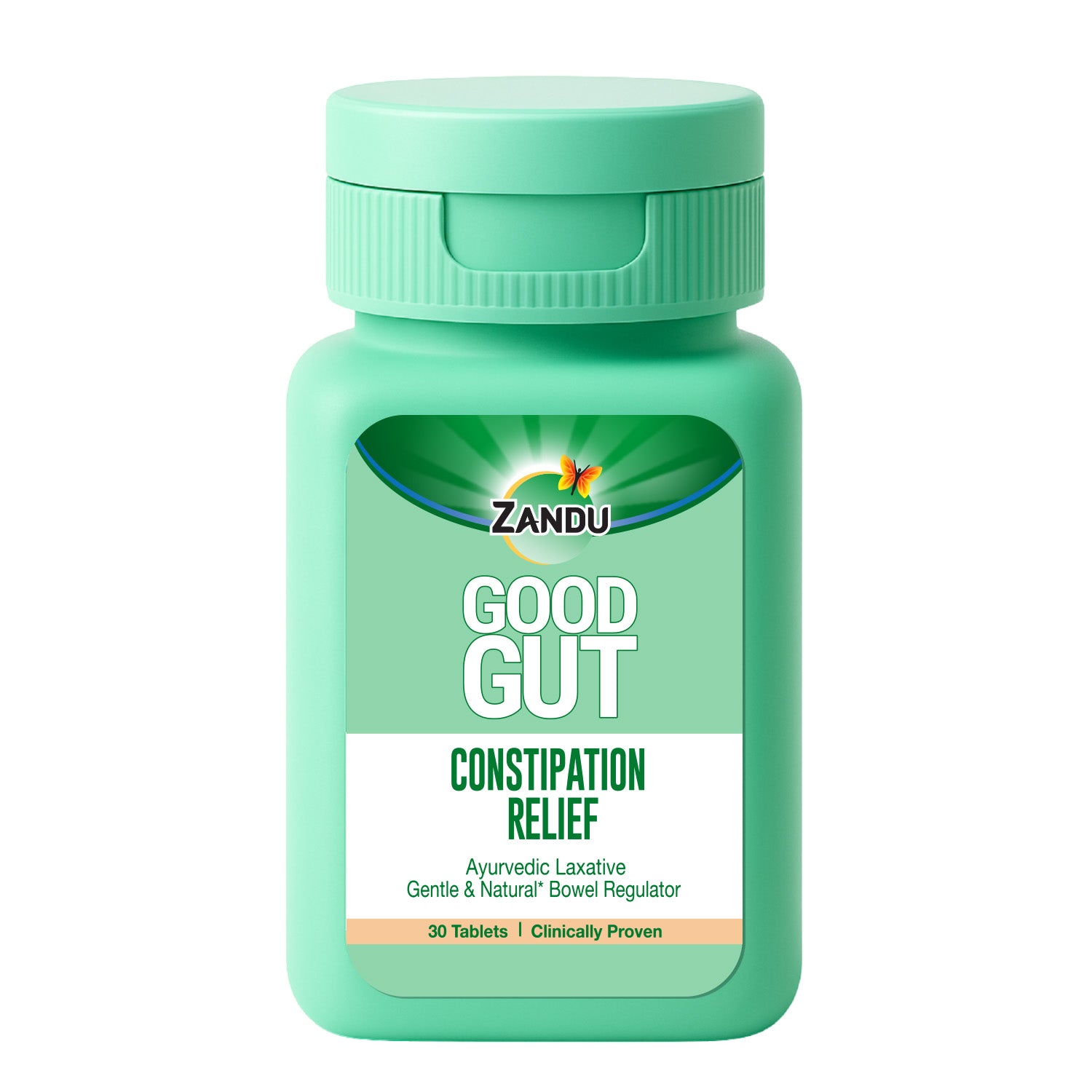
If you still wake up feeling blocked on some days, Zandu Good Gut Constipation Relief Tablets are made for hard stool, straining and incomplete relief. You take 1 tablet at bedtime, and its 8 Ayurvedic herbs work overnight to support a smooth bowel movement the next morning. The brand states they are not habit-forming.
If You Work Night or Rotating Shifts
Shift work upsets the body clock, and the gut feels it. One review reported constipation in 13% of nurses who worked only day shifts, compared with 24% of nurses on rotating shifts with night duty. Sleep disturbance was one of the factors tied to bowel problems. Another study of 399 nurses found IBS in 48% of rotating-shift nurses, compared with 31% of day-shift nurses.
If your hours change often, don't chase a morning timing. Build the routine around when you wake up: a warm drink, something to eat, and then the toilet 20 to 30 minutes later. Keep your meal times as regular as your shifts allow.
Conclusion
Sleep and constipation are closely linked. Your colon rests while you sleep and becomes most active within an hour of waking, especially after a warm drink and breakfast. Short, broken or irregular sleep can throw this rhythm off and raise your chances of constipation.
A fixed wake-up time, warm water, a short walk, a breakfast with fibre and a calm 10 minutes on the toilet 20 to 30 minutes later can train your bowel to go at the same time each day. Good night habits support it. If problems continue, see a doctor.
References
These are the studies and medical sources used in this article.
- Association between sleep disorders and constipation risk: a systematic review and meta-analysis.
- Yang S, Li SZ, Guo FZ, et al. Association of sleep duration with chronic constipation among adult men and women: findings from the National Health and Nutrition Examination Survey (2005-2010).
- Joint association of daily sitting time and sleep duration with constipation among the US population.
- Relationship between sleep patterns and human colonic motor patterns.
- Ambulatory 24-h colonic manometry in healthy humans. American Journal of Physiology: Gastrointestinal and Liver Physiology, 2001.
- Twenty four hour manometric recording of colonic motor activity in healthy man.
- Defecation frequency and timing, and stool form in the general population: a prospective study.
- Why do I poo in the morning? A gut expert explains. The Conversation / Western Sydney University, 2024.
- Royal United Hospitals Bath NHS Foundation Trust. Building a Better Bowel Habit (Physiotherapy patient information), 2021.
- Is coffee a colonic stimulant? European Journal of Gastroenterology & Hepatology, 1998.https://pubmed.ncbi.nlm.nih.gov/9581985/
- Effect of coffee on distal colon function.
- Water supplementation enhances the effect of high-fiber diet on stool frequency and laxative consumption in adult patients with functional constipation.
- Exercise therapy in patients with constipation: a systematic review and meta-analysis of randomized controlled trials.
- The effect of fiber supplementation on chronic constipation in adults: an updated systematic review and meta-analysis of randomized controlled trials.
- Exploratory comparative effectiveness trial of green kiwifruit, psyllium, or prunes in US patients with chronic constipation.
- Implementation of a defecation posture modification device: impact on bowel movement patterns in healthy subjects.
- Disturbed sleep and disturbed bowel functions: implications for constipation in healthy individuals.
- The impact of rotating shift work on the prevalence of irritable bowel syndrome in nurses.
Written by

Zanducare
India’s trusted name in Ayurvedic wellness, offering time-tested solutions for today’s health and lifestyle needs. With formulations rooted in classical Ayurvedic texts and crafted using pure natural ingredients, we bring holistic care into your everyday routine.
Research by


Leave a comment
This site is protected by hCaptcha and the hCaptcha Privacy Policy and Terms of Service apply.