












Dark Brown Poop Colour: Digestive Significance and Health Implications
Dark brown stool is usually normal and is most often caused by dark foods, iron tablets, bismuth medicines like Pepto-Bismol, not drinking enough water, or stool staying in the gut longer, as with constipation. Dark brown stool still looks brown, holds its shape and smells like your usual stool, while black, tarry stool is jet black, sticky and shiny with a very foul smell, which can mean bleeding in the stomach or upper gut and needs a doctor the same day.
The shade mostly depends on two things: what goes into your gut and how long stool stays there. In a study of 66 volunteers, the shape of stool matched how fast food moved through the gut better than how often people went to the toilet. Slow stool has more time to dry out and darken. Water plays a part too. A US survey of 9,373 adults found that men who drank little liquid were 2.4 times as likely to have hard, lumpy stool, and women 1.3 times as likely.
The line between dark brown and black still matters, because it does not take much bleeding to turn stool black. In one study, healthy volunteers swallowed their blood. All of them passed black stool after 300 ml, and 71% did after just 100 ml. So knowing what normal dark brown looks like helps you spot the stool that is not normal.
Is Dark Brown Stool Normal?
Yes, in most cases. Doctors treat every shade of brown, from light tan to deep brown, as healthy. A US state health department guide even lists medium to dark brown as the normal colour for adults.
Stool is brown because of bile, a yellow-green fluid made by the liver. Bile carries a yellow pigment called bilirubin, which comes from old red blood cells. Gut bacteria turn bilirubin into a brown pigment called stercobilin.
A 2024 study found that the bacterial enzyme that starts this change is present in nearly all healthy adults. As bile moves down the gut, it slowly changes from green to brown, which is why all shades of brown, and even green, are considered typical.
Stool is also mostly water. A large review found that about 74.6% of stool is water. Healthy adults pass about 128 g of stool a day. When stool loses more water, the brown pigment gets packed tighter, so the shade looks darker.
Dark brown stool is likely normal for you if it is:
- Is medium to dark brown, not jet black
- Is formed or soft, with clear edges
- Smells strong but familiar
- Passes without pain or much straining
- Goes back to your usual shade within a day or two
How often you go also varies a lot. Many doctors see anywhere from 3 times a day to 3 times a week as normal.
Dark Brown Stool Causes
Most causes are harmless and short-lived. A few need a closer look.
- Constipation: When stool moves slowly, the large intestine pulls out more water. Stool turns harder, drier and darker.
- Not drinking enough water: Less water in the body means less water in stool. Stool gets darker and harder to pass.
- Stool that sinks fast: Stool that stays longer in the intestines often sinks quickly and looks darker. It can mean you need more fluids or fibre.
- Dark foods: Blueberries, black liquorice, grape juice and other dark foods can stain stool for a day or two.
- Iron tablets: Iron often turns stool very dark brown, dark green or black.
- Bismuth medicines: Pepto-Bismol and Kaopectate can darken stool.
- Activated charcoal: This black powder, used for some poisonings and sold as a supplement, can colour stool dark.
- Dark green stool: Stool with bile that has not had time to break down can look dark green. In dim light, it can look almost black.
- A small amount of bleeding: This is a cause not to miss. A small bleed in the upper gut may make stool look dark brown instead of black. Watch for a sticky texture and a foul smell.
Foods That Cause Dark Brown Stool
Some foods and drinks can darken stool for a short time. The colour fades once the food has passed through your gut.

- Blueberries and blackberries
- Black liquorice
- Grape juice
- Chocolate sandwich cookies
- Dark beer
- Blood sausage
- Dark leafy greens like spinach and kale, which are rich in iron
- Foods and drinks with dark food colouring
Beetroot, cranberries, tomato soup and red food colouring usually make stool look reddish, not dark brown. This can look like blood, so mention it to your doctor if you are unsure.
Small black specks in brown stool are often bits of blueberry skin or black beans. If the shade does not return to normal a few days after you stop the food, food is probably not the reason.
Medicines and Supplements That Darken Stool
Iron, bismuth and charcoal darken stool without causing any harm. They do not mean you are bleeding.
Iron tablets: Iron that your body does not absorb passes into stool and darkens it. Iron also upsets the gut in other ways. A review of 43 trials with 6,831 adults found that ferrous sulphate, the most common iron tablet, more than doubled the odds of gut side effects compared with a dummy pill. Constipation is one of these side effects, and it can further darken the stool.
Iron does not affect a stool blood test: In one study, 25 healthy people took 900 mg of ferrous sulphate a day, and none of their stool blood tests turned positive. In another, 78 volunteers took iron for two weeks, and again no test was positive. So if a test finds blood while you are on iron, the iron is not the reason.
Bismuth medicines: Bismuth mixes with sulphur in your gut and forms a dark substance that leaves the body in stool. A review of 35 trials with 4,763 patients found that dark stool was the only side effect that was clearly more common with bismuth, about five times more likely. Stool returns to normal a few days after you stop.
Activated charcoal: It passes through the gut and colours stool dark or black.
Iron tablets, bismuth medicines and some antibiotics, such as amoxicillin, can also turn stool dark green instead of dark brown or black. This shade is harmless and fades once you stop the medicine.
Painkillers like ibuprofen and aspirin, and blood thinners, work differently. They do not stain stool, but they can cause bleeding in the stomach, which can turn stool dark or black.
Dark Brown vs Black Stool
The table below shows how to tell normal dark brown stool apart from black, tarry stool. Only a stool test can confirm blood.
|
What to check |
Dark brown stool |
Black, tarry stool |
|
Colour |
Deep brown, like dark chocolate |
Jet black, like tar |
|
Shine |
Dull, like normal stool |
Shiny and wet-looking |
|
Texture |
Formed, or hard if you are constipated |
Sticky and tarry, sometimes loose |
|
Smell |
Strong but familiar |
Very strong and foul, from digested blood |
|
Common causes |
Dark foods, iron, bismuth, too little water or constipation |
Bleeding from an ulcer, inflamed stomach lining, swollen veins in the food pipe or a tumour |
|
Recent trigger |
You can link it to a food, supplement or medicine |
No food or medicine explains it |
|
How long it lasts |
Fades within a few days of stopping the cause |
Continues or keeps coming back |
|
Other gut symptoms |
Usually none, or mild constipation |
Belly pain, vomiting blood or vomit that looks like coffee grounds |
|
How you feel |
Your normal energy |
Dizzy, weak, pale, breathless or with a racing heart |
|
Medicines that raise risk |
Not a factor |
Regular painkillers or blood thinners |
|
Health history |
No known stomach or liver problem |
Past ulcer, liver disease or heavy drinking |
|
Stool blood test |
Negative |
Positive |
|
What to do |
Drink more water, eat more fibre and watch it |
See a doctor the same day |
Doctors take black, tarry stool seriously for a reason. A large review of emergency patients found that tarry stool seen during a check-up was one of the strongest signs that bleeding was coming from the upper gut. Check your stool in good light, because dark green or very dark brown can look black in a dim bathroom.
Smell is often a better clue than colour. The longer blood travels through the gut, the darker and smellier it gets. A small bleed may look more dark brown than black, but it still tends to smell very foul and feel sticky. Stool stained by food or iron does not have that smell.
If your doctor is unsure, they will start with a stool blood test. If it finds blood, an upper endoscopy can follow. A thin tube with a camera goes down the throat to look at the food pipe, stomach and upper gut, and doctors can often stop the bleeding during the same test.
Dark Brown Poop Meaning for Gut Health
Dark brown poop on its own says little about your gut health. The shape and how easily it passes tell you more.
Doctors use the Bristol Stool Chart for this. Types 3 and 4, shaped like a sausage and soft or smooth, are the healthy types. Types 1 and 2 are hard lumps and point to constipation. Types 6 and 7 are mushy or watery, indicating diarrhoea.
Dark brown stool that is also hard and lumpy usually means that stool is moving too slowly or that you are not drinking enough. This is the pattern seen in the US survey, where low liquid intake was linked with hard stool. In that survey, 10.2% of women and 4.0% of men said their usual stool was hard or lumpy. Stool shape also reflects what is going on inside. In a study of 53 healthy women, researchers found a close link between stool shape and the number and type of gut bacteria.
Research by ZanduCare shows that going every day does not always mean your gut is fine. Among people who use the bathroom daily, nearly 1 in 2 still struggle to complete a bowel movement. Among people who eat fermented foods, more than half still do not have consistently smooth, easy stools.
To keep stool soft and closer to a normal brown:
- Drink enough water throughout the day
- Eat more fruits, vegetables and whole grains for fibre
- Do not hold in the urge to go
- Check with your doctor if iron tablets keep making you constipated
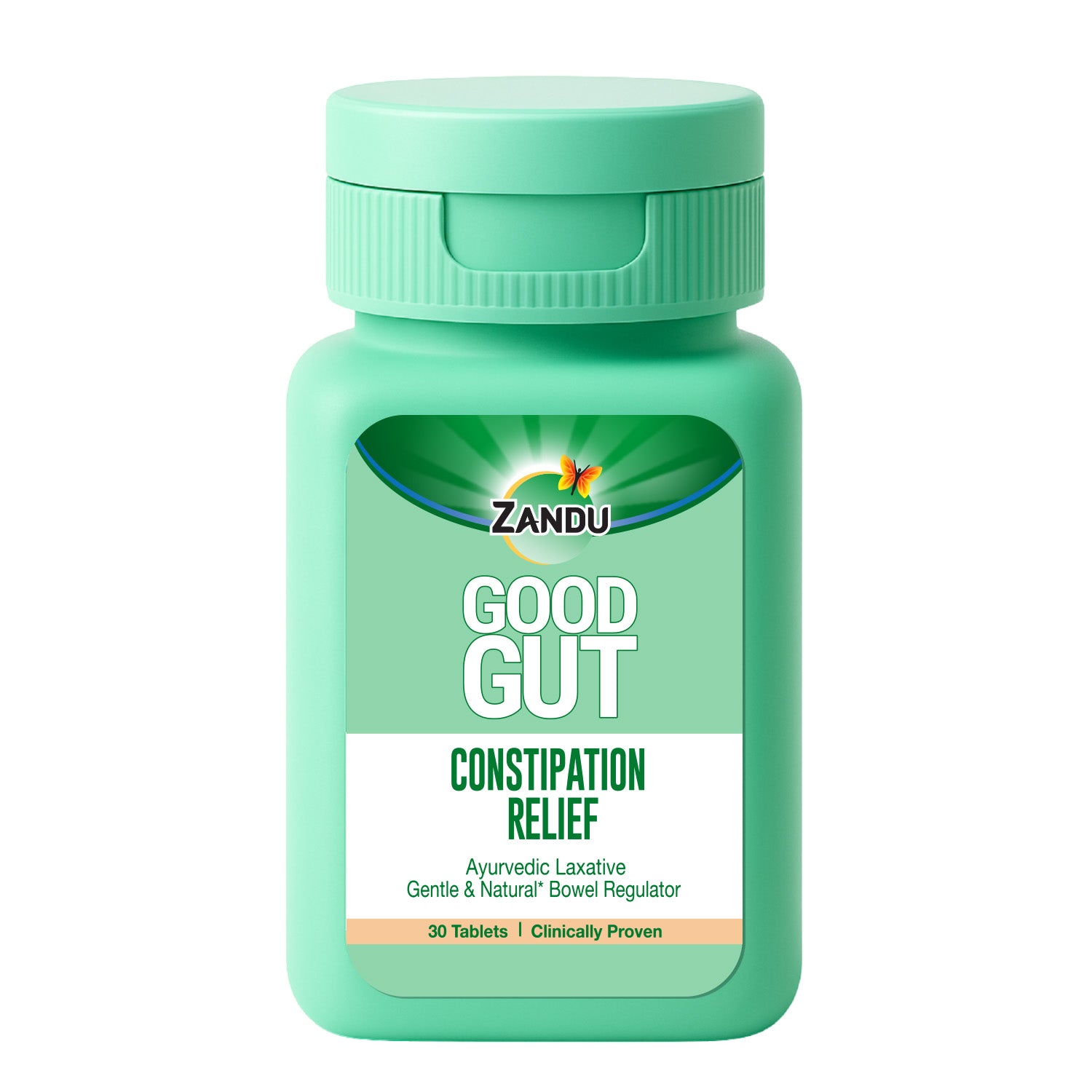
If your stool is dark brown, hard and difficult to pass, Zandu Constipation Relief Tablets, made with 8 Ayurvedic herbs, are taken as one tablet at bedtime and are not habit-forming. Do not use them to hide warning signs like black, tarry or bloody stool.
When to See a Doctor
Dark brown stool that you can link to food, iron or water intake rarely needs a doctor. These signs do.
Go to an emergency room right away if you have:

- Black, sticky, foul-smelling stool
- Vomiting blood or vomit that looks like coffee grounds
- Dizziness, fainting, a racing heart or shortness of breath
- Severe belly pain
See a doctor soon if you have:
- Dark stool that does not lighten a few days after stopping a food or supplement
- Constipation that keeps coming back
- Red streaks or blood on the tissue paper
- Weight loss without trying or loss of appetite
- Regular use of painkillers or blood thinners along with dark stool
- A history of ulcers or liver disease
- Stool that stays narrow or pencil-thin
Your doctor will ask what you ate, which medicines or supplements you take and how long the change has lasted.
Conclusion
Dark brown stool is usually normal. It often comes from dark foods, iron tablets, bismuth medicines, too little water or constipation, and it fades once the cause is gone. Black, tarry stool is different: it is jet black, sticky, shiny and foul-smelling, and it can mean bleeding in the upper gut. If your stool turns black and tarry or comes with dizziness, vomiting blood or belly pain, see a doctor the same day.
References
These are the studies and medical sources used in this article.
- Stool form scale as a useful guide to intestinal transit time.
- Association of low dietary intake of fiber and liquids with constipation: evidence from the National Health and Nutrition Examination Survey.
- The Vampire Study: Significant elevation of faecal calprotectin in healthy volunteers after 300 ml blood ingestion mimicking upper gastrointestinal bleeding.
- BilR is a gut microbial enzyme that reduces bilirubin to urobilinogen.
- The Characterization of Feces and Urine: A Review of the Literature to Inform Advanced Treatment Technology.
- Ferrous sulfate supplementation causes significant gastrointestinal side-effects in adults: a systematic review and meta-analysis.
- Effect of iron on the guaiac reaction.
- An investigation into the effects of oral iron supplementation on in vivo Hemoccult stool testing.
- Adverse events with bismuth salts for Helicobacter pylori eradication: systematic review and meta-analysis.
- Does this patient have a severe upper gastrointestinal bleed?
- Stool color: When to worry.
- What Does My Stool (Poop) Color Mean?
- Cleveland Clinic. Melena (Black Stool).
- What Your Poop Color Reveals About Your Health.
- Montana Department of Public Health and Human Services.
- Why Is Poop Brown?
- Stool consistency is strongly associated with gut microbiota richness and composition, enterotypes and bacterial growth rates.
Written by

Zanducare
India’s trusted name in Ayurvedic wellness, offering time-tested solutions for today’s health and lifestyle needs. With formulations rooted in classical Ayurvedic texts and crafted using pure natural ingredients, we bring holistic care into your everyday routine.
Research by



Leave a comment
This site is protected by hCaptcha and the hCaptcha Privacy Policy and Terms of Service apply.