







Acid Reflux: Meaning, Symptoms, Causes, Foods Trigger & Ayurvedic View Explained
Acid reflux is common, but many people feel confused about what it actually means. Some call it “acidity”, some call it “gas”, and some only notice a sour taste in the mouth. This article starts with a clear definition, then explains how acid reflux is different from heartburn, indigestion, and GERD.
You will also learn the reasons for acid reflux, what causes acid reflux inside the body (science view), and how Ayurveda explains it through Pitta, Agni, and Vata.
What Is Acid Reflux
Acid reflux means stomach acid moves upwards from the stomach into the food pipe (oesophagus). It can irritate the food pipe and create uncomfortable sensations.
In day-to-day language, people often describe it as “burning in the chest”, “sour burps”, or “acid coming up”.
If you are unsure whether what you are feeling is reflux or something else, reviewing common acid reflux symptoms can help you recognise the pattern more clearly.
What Acid Reflux Is
- Acid from the stomach travels upwards
- It may reach the throat or mouth in some people
- It can feel worse after eating, when bending, or when lying down
What Acid Reflux Is Not
- It is not always “gas.”
- It is not always a “stomach infection.”
- It is not always only because of spicy food
Acid Reflux vs Heartburn vs GERD vs Indigestion
Many people use these words as if they are the same. They are related, but not identical, and knowing the difference builds clarity.
This section helps you label your symptoms correctly before you try any acid reflux remedy.
Acid Reflux Vs Heartburn
- Acid reflux is the backflow of stomach contents into the oesophagus (the food pipe that carries food from your mouth to your stomach).
- Heartburn is the burning feeling that many people get because of the backflow.
So, heartburn can be one symptom of acid reflux. That burning sensation in the chest is often described simply as stomach burning, even though it may actually be reflux.
Acid Reflux vs GERD
- Many people get reflux sometimes.
- When reflux keeps happening and becomes a longer-term pattern, doctors may call it GERD (gastro-oesophageal reflux disease).
Acid Reflux vs Indigestion
Indigestion usually means discomfort related to digestion, such as heaviness, fullness, nausea, or upper stomach discomfort after meals. Reflux can be present with indigestion, but they are not the same thing.
Acid Reflux vs “Acidity”
In India, “acidity” is a common label used for many stomach complaints. Sometimes it’s is reflux, sometimes it's indigestion, sometimes it’s a mix of both. That is why noticing the exact feeling matters.
What Acid Reflux Feels Like
Acid reflux symptoms can look different from person to person. Some feel a strong burning, while others only notice an unpleasant taste.
This is also where the keyword “acid reflux mouth” fits in, because mouth and throat symptoms are common in reflux.
Common Acid Reflux Symptoms
- Burning feeling in the chest (heartburn)
- Sour or bitter taste in the mouth (often called acid reflux mouth)
- Food or sour liquid coming back up (regurgitation)
- Burping more than usual
- Throat irritation, hoarse voice, or cough that keeps coming back (in some people)
- A feeling of a lump in the throat (in some people)
- Upper abdominal bloating or discomfort after meals (some people report this along with reflux)
Repeated sour burps are also commonly linked with reflux episodes.
How People Commonly Describe It
- “Burning rises up after tea or food.”
- “Sour water comes to my throat.”
- “My mouth tastes bitter in the morning.”
- “I feel upper stomach pressure after eating.”
Reasons for Acid Reflux in Daily Life
Most people want quick clarity on reasons for acid reflux, because that helps them avoid triggers.
These reasons are often linked to food, timing, posture, stress, and routine.
Every Day, Triggers People Commonly Notice
- Heavy, rich, oily meals
- Eating fast and overeating
- Very late dinners
- Lying down soon after eating
- Bending forward right after meals
- Tea or coffee, especially on an empty stomach (some people find this irritating)
- Fried snacks, bakery items, and packaged foods
- Smoking or alcohol (for people who use them)
Very spicy meals can irritate digestion, and some people specifically report stomach burning after eating spicy food.
Real-World Situations That Often Trigger Reflux
- Weddings or family functions with heavy meals, sweets, and late nights
- Long travel days with irregular meals and roadside snacks
- Busy workdays where lunch is skipped, and dinner becomes too heavy
- People who sit for long hours and do not walk after meals
What Causes Acid Reflux Inside the Body
Now, let us answer the question: what causes acid reflux from a scientific point of view?
The explanation is simple when you think of the food pipe like a tube with a “valve” near the stomach.
The Basic Science Idea
- Food travels down the food pipe into the stomach.
- There is a ring-like muscle at the lower end of the oesophagus that helps keep stomach contents down.
- If this ring relaxes at the wrong time, acid can move up and irritate the oesophagus.
Why It Can Feel Worse After Meals or While Lying Down
- A very full stomach can increase upward pressure
- Lying down reduces the help you get from gravity
- Bending can compress the abdomen and push contents upward
This is why many people report symptoms after meals and at night.
Ayurveda View: Amlapitta, Agni, And Dosha Imbalance
Ayurveda explains reflux mainly through Pitta (heat), Agni (digestion), and Vata (upward movement). It gives a different language, but the focus is still on root imbalance and daily habits.
In Ayurveda, a common term used for acid-like symptoms is Amlapitta, which can be understood as excess sourness and heat in digestion.
How Ayurveda Understands the Reflux Pattern
- Pitta Increase: More heat, sourness, burning, irritation
- Agni Disturbance: Digestion becomes unstable, leading to acidity-like discomfort
- Vata Disturbance: Upward movement becomes stronger, so sour burps and “acid coming up” feel worse
- Kapha Involvement: Heaviness, mucus feeling, slow digestion can sometimes sit along with reflux
Ayurveda also looks at the person’s routine, mental stress, and food timing, because these can disturb digestion.
Struggling with bloating? Try Ayurvedic gut support products to ease discomfort and promote smoother digestion naturally.
Dosha-Based Types of Acid Reflux
Not everyone has the same reflux. The dosha pattern can change the “feel” of symptoms.
This is useful because the same food may not suit everyone.
Pitta-Led Reflux
- Burning and heat are prominent
- Sour burps are common
- Spicy, fried, and very sour foods may aggravate it
- Upper abdominal burning can be felt after meals
Vata-Led Reflux
- Symptoms may fluctuate a lot
- More belching, dryness, gurgling, and discomfort with stress
- Irregular meals and late nights may worsen it
- The throat can feel irritated in some people
Kapha-Led Reflux
- Heaviness, sluggish digestion, nausea-like feeling
- More mucus, frequent throat clearing in some people
- Symptoms may feel worse after heavy dairy, sweets, and oily meals
- More discomfort when inactive after meals
If you are unsure of your pattern, personalised guidance is usually easier than guessing.
Foods and Drinks That Can Trigger Acid Reflux
Food triggers are not identical for everyone, but some foods are commonly reported as irritating, especially when digestion is already sensitive.
If you are searching for an acid reflux remedy, avoidance is often the first simple step. You can also refer to a structured acid reflux diet or a simple acid reflux diet chart to guide food choices more clearly.
Foods Many People Prefer to Limit During Active Reflux
- Deep-fried snacks and very oily gravies
- Very spicy food and heavy masalas
- Very sour items taken often (pickles, excess chutneys, strong vinegar-style foods)
- Bakery items, packaged snacks, carbonated drinks
- Very heavy sweets after heavy meals
- Raw onion and raw tomato in large amounts (some people feel discomfort)
Some of these fall into common acid reflux foods that people choose to reduce during active discomfort.
Drinks That Can Be Tricky for Some People
- Tea or coffee, especially on an empty stomach
- Cold drinks and iced beverages
- Very strong ginger or very strong masala drinks if you already feel burning
You do not need to remove everything at once. A calmer approach is to reduce likely triggers and observe your body.
Meal Timing and Habits That May Reduce Reflux
Meal timing is a big part of reflux control. Even the “right” food can feel wrong if the timing and portion are off.
These habits are also useful for people who keep searching how to avoid bloating, because reflux and bloating can overlap for some people.
Meal Timing Tips
- Keep meal times steady most days
- Make lunch the heavier meal and keep dinner lighter if possible
- Avoid eating very late at night
- Leave a comfortable gap between dinner and sleep
- Avoid overeating, especially at dinner
Simple Eating Habits
- Eat seated and without distractions
- Chew slowly and properly
- Avoid rushing meals between calls or while travelling
- Take small sips of water rather than large amounts during meals (if large amounts make you feel heavy)
Post-Meal Habits
- Sit upright after eating for some time
- Take a gentle walk after meals if you can
- Avoid bending forward immediately after meals
Home Remedies for Acid Reflux Used in Indian Homes
Home remedies for bloating and reflux often overlap because both can worsen when digestion feels unsettled.
These are gentle options many Indian households consider. Pick one method at a time and keep it simple.
Gentle Options People Often Try
- Warm water sips through the day
- Saunf (fennel) after meals if it suits you
- Jeera water in a mild form
- Coriander seed water (mild)
- Light, warm meals like dal, rice, khichdi, and well-cooked sabzi during active discomfort
What to Avoid With Home Remedies
- Very spicy “quick fixes” when burning is high
- Too many remedies together
- Very sour drinks taken as a “test” during reflux
If symptoms are frequent, home remedies alone may not be enough, and it is sensible to seek medical advice.
Acid Reflux Antacid: What People Use and What to Remember
Many people search for acid reflux antacid options because they want quick relief. Antacids are commonly used to neutralise stomach acid for short-term symptoms, but the correct choice and timing matter.
If reflux is frequent or strong, it is safer to speak to a doctor rather than self-medicating repeatedly.
Points to Keep in Mind
- Antacids may give short-term symptom relief for some people
- Repeated symptoms deserve evaluation, because reflux can have different reasons
- Some medicines can interact with each other, so guidance is useful
- Chest discomfort should never be ignored, especially if it feels unusual or severe
If you are using any regular medicines or have other health conditions, discuss antacid use with a healthcare professional.
Warning Signs That Need Medical Attention
Most reflux is manageable, but some symptoms should not be taken lightly.
If you notice these, please consult an Ayurvedic Clinician without delay.
- Trouble swallowing, or food feeling stuck
- Repeated vomiting
- Black stools or blood in stool
- Unexplained weight loss or strong weakness
- Severe chest pain or chest discomfort that feels different from usual heartburn
- Symptoms that keep worsening despite changes
Where Ayurveda Support and Guidance Can Fit
Most people start with food changes, earlier dinner, and avoiding triggers. If symptoms still keep coming back, Ayurveda usually looks deeper at Pitta (heat), Agni (digestion strength), and Vata (upward movement) to understand why reflux is repeating.
At this point, many people prefer not to do guesswork. A ZanduCare consultation can help you map your pattern clearly, what seems to trigger you, what foods suit you better, and what daily routine changes are realistic for your lifestyle.
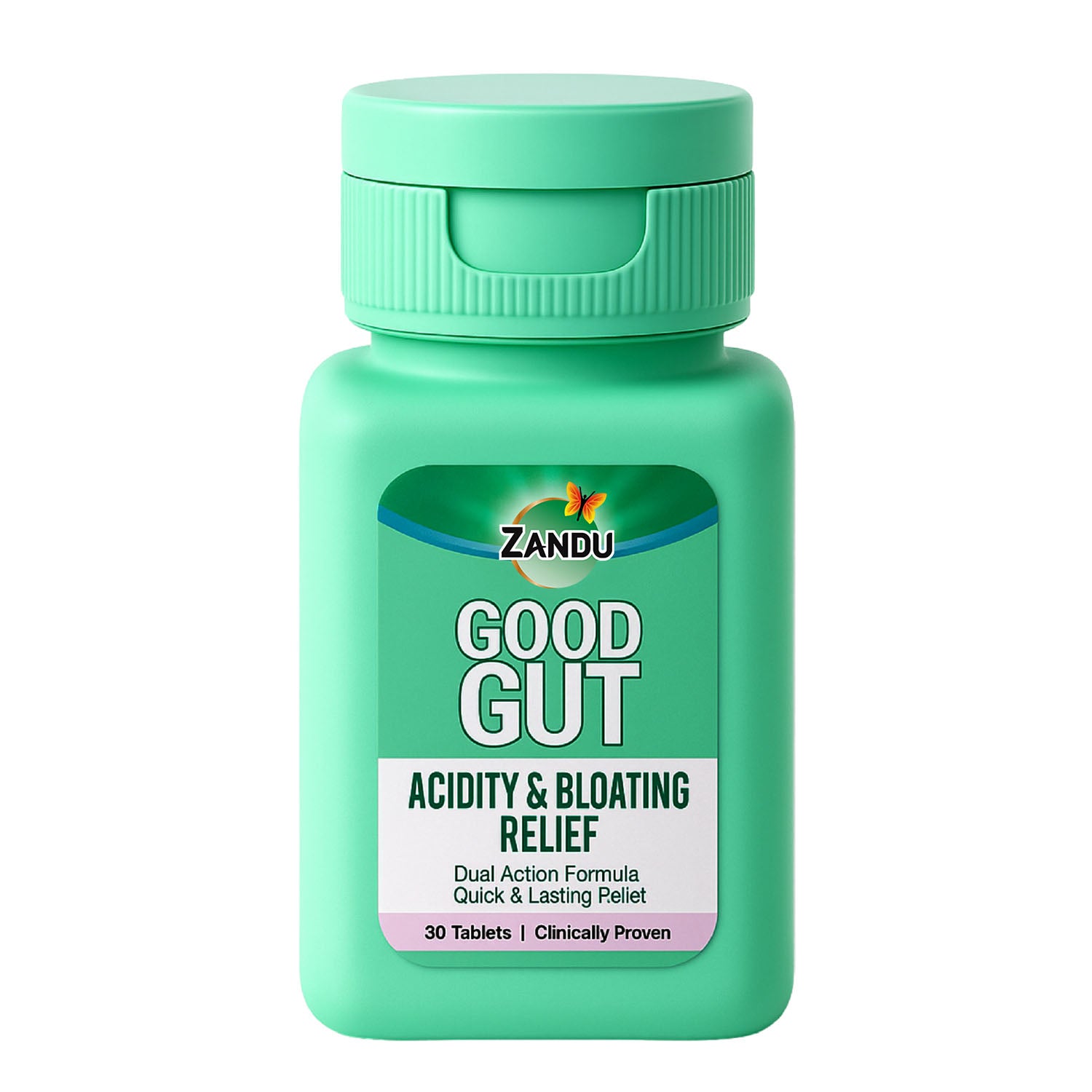
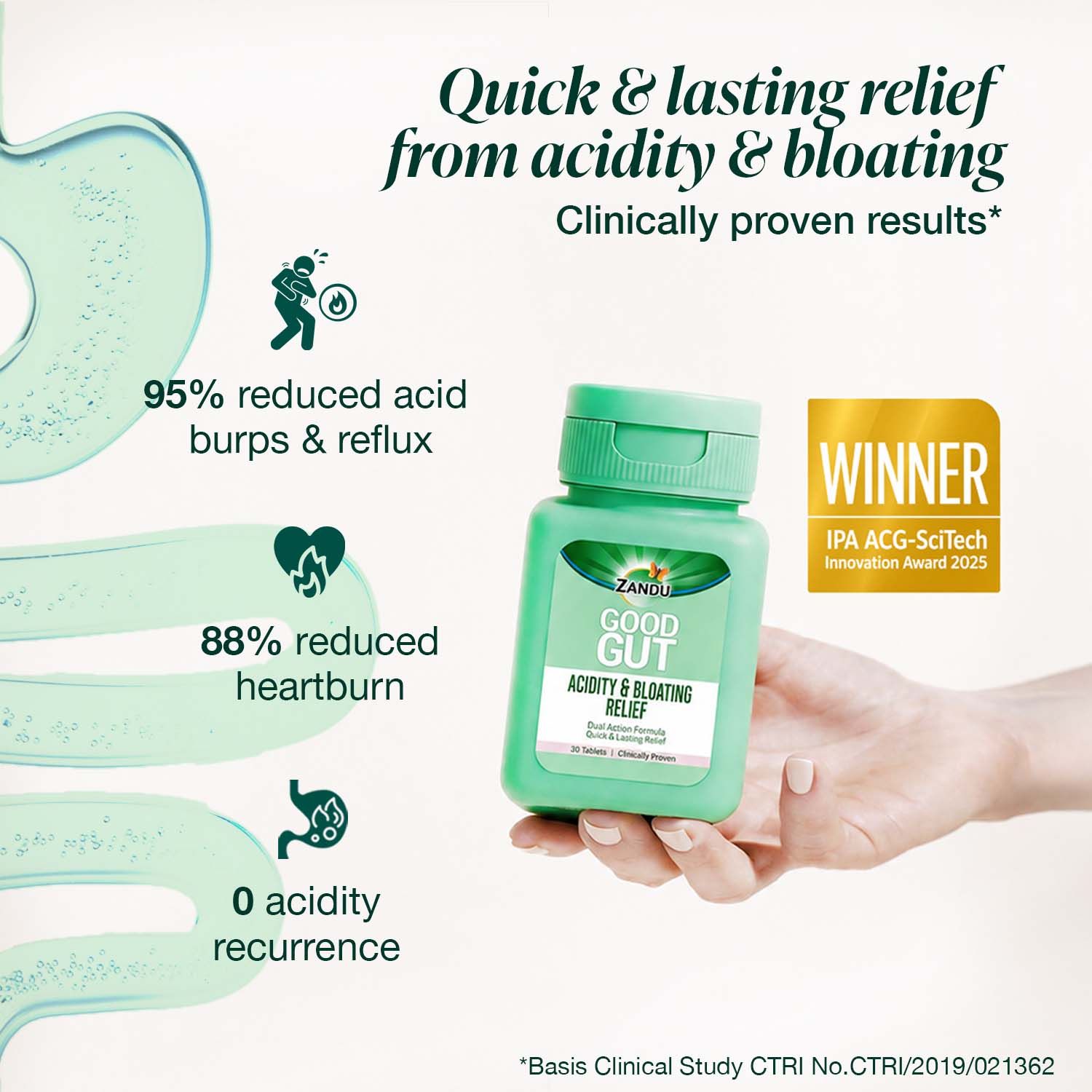
Along with diet and routine, some people also discuss an Ayurvedic medicine option for acidity that comes with gas and bloating. One such option is Zandu Good Gut Acidity & Bloating Relief Tablets, which is described as a non-habit-forming Ayurvedic tablet made for acidity, gas, and bloating relief. As per the product information, it uses a dual-action, two-layer formula that combines Muktashukti Bhasma (Pearl Oyster) for quick comfort in acidity, along with GutGard® Yashti, which is positioned to support digestion and longer-term gut comfort.
Instead of starting any tablet randomly, it is more sensible to check suitability, timing, and how it fits with your meals through a ZanduCare consultation, especially if you already take other medicines or your symptoms feel frequent.
Conclusion
Acid reflux meaning is simple: acid moves up from the stomach into the oesophagus, and this can create a burning, sour taste, or regurgitation. The reasons for acid reflux often stem from food choices, meal timing, late nights, posture after meals, and stress.
Science explains it through the behaviour of the lower food pipe valve and pressure changes after meals, while Ayurveda explains it mainly through Pitta, Agni, and Vata imbalance. If you keep experiencing symptoms frequently, focus first on calmer meals, lighter dinners, and upright posture after eating, and take medical advice when needed.
References
1. Gastroesophageal Reflux Disease(Archived) http://ncbi.nlm.nih.gov/books/NBK441938/
2. The role of dexlansoprazole modified-release in the management of gastroesophageal reflux disease https://pmc.ncbi.nlm.nih.gov/articles/PMC5298478/

Written by

Zanducare
India’s trusted name in Ayurvedic wellness, offering time-tested solutions for today’s health and lifestyle needs. With formulations rooted in classical Ayurvedic texts and crafted using pure natural ingredients, we bring holistic care into your everyday routine.
Research by




Leave a comment
This site is protected by hCaptcha and the hCaptcha Privacy Policy and Terms of Service apply.