











Different Types of Poop and What They Mean for Your Digestive Health?
A healthy bowel movement is typically medium-to-dark brown, soft yet well-formed and easy to pass, and doctors use the Bristol Stool Chart to sort stool into seven types: types 1 and 2 point to constipation, types 3 and 4 are healthy, and types 5 to 7 point to loose stools or diarrhoea. Get a change in stool form checked if it lasts more than 2 weeks and see a doctor right away if you notice blood, black or tar-like stool, pale stool, weight loss or severe belly pain.
The chart comes from a study of nearly 1,900 adults in Bristol, UK, which found that only 56% of stools passed by women and 61% passed by men were the normal, healthy types. A later study of 66 volunteers found that stool shape was a better guide to how fast food moves through the gut than how often a person went to the toilet. Internal research by ZanduCare also found that 1 in 5 people who rarely get skin breakouts still have stool that is hard, lumpy or difficult to pass.
The 7 Bristol Stool Types at a Glance
Doctors at the Bristol Royal Infirmary in the UK created the Bristol Stool Chart. The table below shows the 7 Bristol stool types, what each one looks like and what it usually means.
|
Type |
What it looks like |
What it usually means |
|
Type 1 |
Separate hard lumps, like nuts or pebbles, hard to pass |
Severe constipation. Stool has stayed in the gut too long |
|
Type 2 |
Sausage-shaped but lumpy |
Mild to moderate constipation |
|
Type 3 |
Sausage-shaped with cracks on the surface |
Healthy stool |
|
Type 4 |
Smooth and soft, like a sausage or snake |
Healthy stool, often called the ideal type |
|
Type 5 |
Soft blobs with clear-cut edges, easy to pass |
Borderline. Stool is moving a little fast |
|
Type 6 |
Fluffy, mushy pieces with ragged edges |
Mild diarrhoea |
|
Type 7 |
Fully watery, no solid pieces |
Diarrhoea |
One odd stool now and then is normal. What matters is the type you pass most of the time, and whether it changes.
What Hard, Normal and Loose Stools Mean?
The 7 types of stool fall into three simple groups.
Types 1 and 2: Constipation
Hard, lumpy stool means it has spent too long in the large intestine, which keeps pulling water out of it. It is often hard to push out and may hurt. Many people describe it as, "Pet saaf karne me bahut zor lagta hai."
Common reasons are too little water, too little fibre, sitting most of the day and holding in the urge. In a large US study of 10,914 adults, about 10% of women and 4% of men said their usual stool was type 1 or 2.
Types 3 and 4: Healthy Stool
These are the types to aim for. They are soft but hold their shape, and they pass without straining. They show that food is moving through your gut at a good pace and that you are getting enough water and fibre.
Types 5, 6 and 7: Loose Stool and Diarrhoea
Loose stool means it has moved through the gut too fast for water to be taken back. Type 5 now and then is not a concern. Types 6 and 7 usually mean diarrhoea.
Common reasons are a stomach infection, food poisoning, lactose intolerance, too much coffee or alcohol, stress, some medicines like antibiotics, and conditions such as IBS, coeliac disease or ulcerative colitis. Watery stool for more than a day or two can dry you out, so drink water and ORS.
Why Does Your Stool Consistency Change?
Doctors group stool consistency types by how much water the stool holds, and that depends mostly on how long it stays in your gut.
- Gut speed: In the study of 66 volunteers, people took senna, a laxative, and then loperamide, an anti-diarrhoea medicine. Senna sped up the gut and made stool looser, while loperamide slowed it down and made stool harder. Stool shape tracked these changes better than how often people went.
- Water Intake: In the US study of 10,914 adults, men who drank the least fluid were 2.4 times more likely to have hard stool, and women 1.3 times more likely. In a smaller study, when 8 healthy men cut their drinks to under 500 ml a day for a week, their bowel movements dropped from about 7 to 5 a week.
- Fibre: Fibre holds water and adds bulk. A review of 16 trials found that fibre supplements made stool softer, especially at more than 10 g a day.
- Gut bacteria: In a study of 53 healthy women, stool consistency was strongly linked to the variety and mix of bacteria in the gut.
- Food and drinks: Coffee, alcohol, spicy or oily food and sugar-free sweets with sorbitol can loosen stool.
What Healthy Poop Looks & Feels Like?
Healthy poop has a few simple signs.
- Colour: Light to dark brown. The brown comes from bile and from a pigment made when old red blood cells break down. A green tinge can also be normal.
- Shape: One long piece or a few soft pieces, like type 3 or 4.
- Ease: It passes without pain or hard pushing.
- Sinking: Healthy stool usually sinks.
- Smell: It smells, but the smell shouldn't change suddenly and stay that way.
What Your Poop Colour Says About Your Health
Colour is one of the clearest clues to what your poop says about your health. Food and medicines often change it for a day or two, but some colours need a doctor.
|
Colour |
Common harmless cause |
When it can be a concern |
|
Green |
Spinach, methi, palak or other green foods |
Stool moving too fast, as in diarrhoea |
|
Yellow or greasy |
A very fatty meal |
Fat not being absorbed, as in celiac disease or pancreas problems. Bright yellow watery stool can mean a gut infection like giardia |
|
Orange |
Carrots, papaya, sweet potato, some antacids |
Blocked bile flow, if it keeps happening |
|
Red |
Beetroot, red food colour, tomato juice |
Bleeding in the lower gut, from piles, a fissure, polyps or, rarely, cancer |
|
Black |
Iron tablets, bismuth medicines, black foods |
Black, sticky, tar-like stool can mean bleeding higher up in the gut |
|
Pale, white or clay |
Some anti-diarrhoea medicines |
Little or no bile, which can point to a liver, gallbladder or bile duct problem |
If you have not eaten anything that explains red or black stool, see a doctor the same day.
Floating, Foamy, Thin or Slimy Stool
Shape and colour are not the only signs to watch for. Look out for these too.
- Floating stool: Often just extra gas or a high-fibre meal. If it is also greasy, smells very bad and is hard to flush, the body may not be absorbing fat properly.
- Foamy stool: Can come from gas, an infection, IBS or a problem digesting fat.
- Mucus: A little is normal. A lot of mucus, or mucus with blood, can mean the gut lining is irritated.
- Thin, pencil-like stool: Now and then is fine. If your stool stays much thinner than usual, get it checked.
- Undigested food or white specks: Usually seeds, nuts or corn. Rarely, it can mean poor digestion or worms.
What Your Bowel Movement Frequency Says About Your Digestive Health
Doctors also look at types of bowel movements by how often and how easily you go. Most healthy people pass stool anywhere from 3 times a day to 3 times a week. The Bristol study found that only 40% of men and 33% of women had a regular once-a-day pattern, so going daily is not the only normal.
Going less than 3 times a week usually means constipation. Going more than 3 times a day with loose stools usually means diarrhoea. Research by ZanduCare found that nearly 1 in 2 people who go to the toilet every day still struggle to complete a bowel movement, so ease matters as much as how often you go.
A bowel movement should not require long sitting or hard pushing. If nothing happens within about 10 minutes, get up and try again later.
How to Get Your Stool to Type 3 or 4?

Small daily habits can help move your stool towards a healthy type.
- Drink enough water: About 1.5 to 2 litres a day, more in hot weather. In a study of 117 adults with constipation who ate about 25 g of fibre a day, those who drank 2 litres of water daily had more bowel movements and needed fewer laxatives.
- Eat more fibre, slowly: Dal, rajma, chana, whole wheat roti, oats, vegetables, guava, papaya and isabgol (psyllium). Adults need about 22 to 34 g a day. Add it over a week or two to avoid gas.
- Add kiwi or prunes: In a trial of 79 adults with long-term constipation, 2 green kiwis or 100 g of prunes a day for 4 weeks made stool softer.
- Move every day: A review of 9 trials with 680 people found that exercise, mostly walking, improved constipation symptoms.
- Keep a routine: Sit on the toilet at the same time each day, ideally after breakfast, with your feet on a small stool.
- For loose stool: Drink water and ORS, eat light food like khichdi, curd rice or banana, and cut back on coffee, alcohol and oily food until it settles.
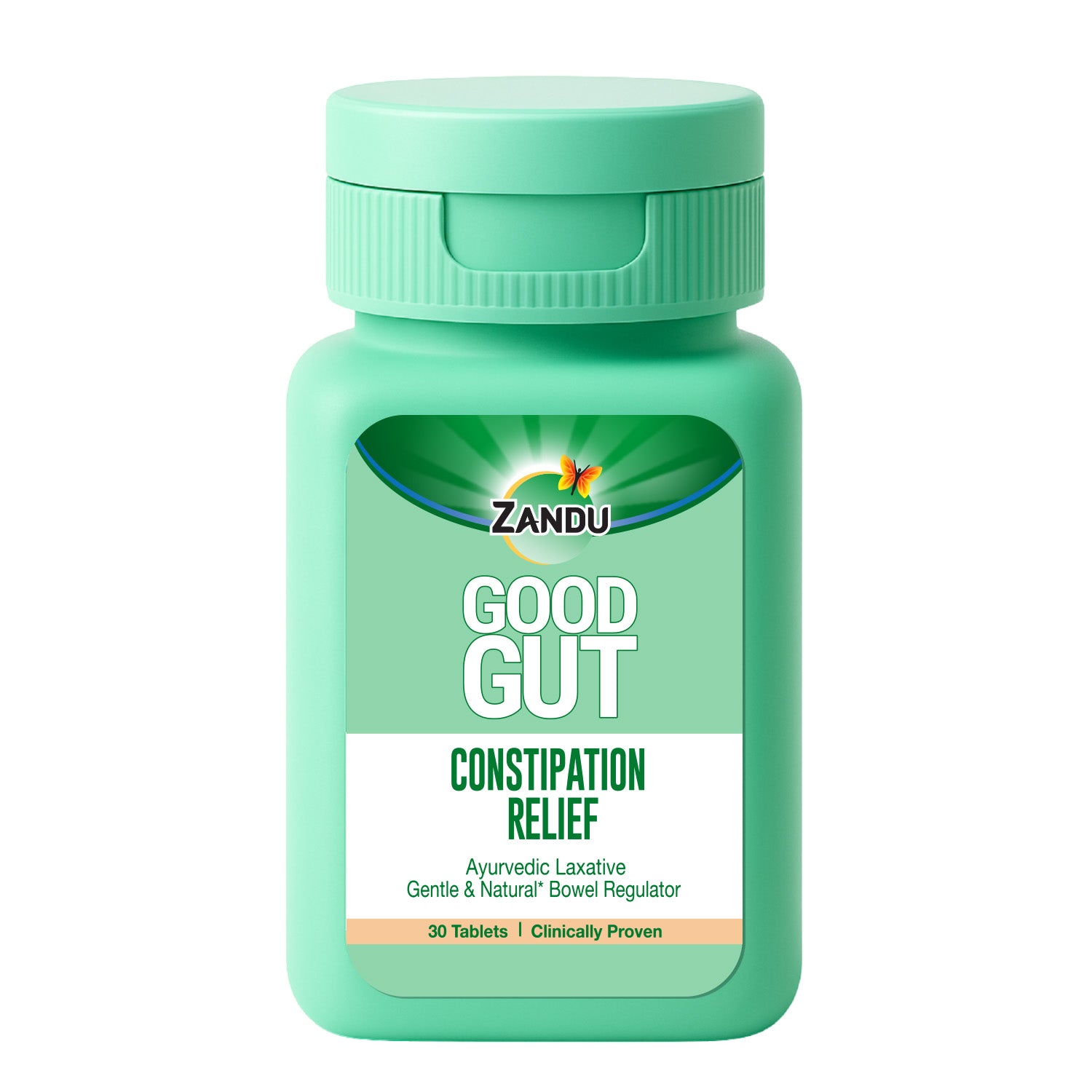
If you often pass type 1 or 2 stool even after these changes, Zandu Good Gut Constipation Relief Tablets are made for hard stool, straining and incomplete relief. You take 1 tablet at bedtime, and its 8 Ayurvedic herbs work overnight. The brand states they are not habit-forming. They are not meant for loose stools or diarrhoea.
How to Track Your Stool Type at Home?

Checking your stool takes a few seconds and needs no test. Doctors use the Bristol Stool Chart because it gives everyone the same words to describe stool. The study of 66 volunteers also showed that stool shape changes along with how fast the gut is working.
- Look before you flush and match it to the nearest type on the chart.
- Note the type, the colour and anything unusual, such as blood or mucus, in a notebook or on your phone.
- Write down what you ate, how much water you drank, any new medicine and how stressed you felt that day.
- Keep this up for 1 to 2 weeks to see your usual pattern.
If most of your stools are type 3 or 4, your gut is likely working well. If you keep seeing types 1, 2, 6 or 7, the diary helps you spot triggers such as low water, a new tablet or certain foods. It also gives your doctor clear details to work with.
When a Change in Stool Should Be Checked?
One unusual stool is rarely a problem. Get it checked if a change in stool shape, colour or how often you go lasts more than 2 weeks or keeps coming back.
See a doctor right away if you notice:
- Red blood in or on your stool or on the toilet paper
- Black, sticky, tar-like stool
- Pale, white or clay-coloured stool
- Diarrhoea with fever, vomiting or signs of dehydration
- Severe or constant belly pain
- Weight loss without trying
- Stool that is much thinner than usual
- Greasy, foul-smelling stool that is hard to flush
Note your stool type for a week before your visit. The Bristol Stool Chart gives you and your doctor a clear, shared way to describe what is happening.
Conclusion
The types of poop on the Bristol Stool Chart give a simple picture of your digestive health. Types 1 and 2 point to constipation, types 3 and 4 are healthy, and types 5 to 7 point to loose stool or diarrhoea. Most changes come from water, fibre, food or stress and settle in a few days. A change that lasts more than 2 weeks or any blood, black, tar-like or pale stool, needs a doctor.
References
These are the studies and medical sources used in this article.
- Defecation frequency and timing, and stool form in the general population: a prospective study.
- Stool form scale as a useful guide to intestinal transit time.
- Association of low dietary intake of fiber and liquids with constipation: evidence from the National Health and Nutrition Examination Survey.
- Low fluid intake lowers stool output in healthy male volunteers.
- The effect of fiber supplementation on chronic constipation in adults: an updated systematic review and meta-analysis of randomized controlled trials.
- Stool consistency is strongly associated with gut microbiota richness and composition, enterotypes and bacterial growth rates.
- Water supplementation enhances the effect of high-fiber diet on stool frequency and laxative consumption in adult patients with functional constipation.
- Treatment for Constipation.
- Exploratory comparative effectiveness trial of green kiwifruit, psyllium, or prunes in US patients with chronic constipation.
- Exercise therapy in patients with constipation: a systematic review and meta-analysis of randomized controlled trials.
Written by

Zanducare
India’s trusted name in Ayurvedic wellness, offering time-tested solutions for today’s health and lifestyle needs. With formulations rooted in classical Ayurvedic texts and crafted using pure natural ingredients, we bring holistic care into your everyday routine.
Research by




Leave a comment
This site is protected by hCaptcha and the hCaptcha Privacy Policy and Terms of Service apply.