









Article: Normal Poop Colour: What It Indicates About Your Digestive Health
Normal Poop Colour: What It Indicates About Your Digestive Health
Normal stool colour is any shade of brown, from light tan to dark chocolate, and a slightly greenish tint is also normal, as bile from the liver is turned brown by gut bacteria during digestion. See a doctor if your stool turns black and tarry, bright red or maroon, pale, white or clay-coloured, or yellow and greasy, or if any unusual colour lasts more than a few days without a food or medicine to explain it.
Most stool changes are harmless. In a Swedish study of healthy adults who had a full gut check-up, including a colonoscopy, 77% of all stools were normal in form, and 98% of people went anywhere from 3 times a day to 3 times a week. But some colours are worth taking seriously.
In one study, healthy volunteers swallowed their own blood, and 71% passed black stool after just 100 ml. In another study of 78,184 babies in Taiwan, a simple stool colour card used by parents picked up 26 of the 29 babies who had a serious bile duct disease before they were 2 months old.
So colour can be an early clue. Knowing what is normal helps you spot the changes that are not.
Healthy Poop Colour
A healthy poop colour is brown. The exact shade can change from day to day and still be normal.
Brown comes from bile, a yellow-green fluid your liver makes to digest fat. Bile carries a yellow pigment called bilirubin, which forms when old red blood cells break down. In the large intestine, gut bacteria turn bilirubin into a brown pigment called stercobilin. A 2024 study found the bacterial enzyme that starts this change in nearly all healthy adults. It was less common in newborns and in people with inflammatory bowel disease.
Food also plays a part. About 74.6% of stool is water, and gut bacteria make up 25-54% of the solid part. The rest is food your body did not digest, so what you eat can tint the shade. Healthy adults pass about 128 g of stool a day, while people on high-fibre diets pass about twice as much.
Healthy stool is usually:
- Light to dark brown, sometimes with a green tinge
- Soft to firm and sausage-shaped
- Easy to pass, without pain or much straining
- Strong-smelling, but with a smell you know as your own
- Brown again within a day or two after a colourful meal
What Stool Colours Mean
Four things decide what colour your stool turns. Knowing them helps you work out the reason behind a change.
- What you eat: Leafy greens, beetroot, carrots, blueberries and food colouring can all pass their colour into stool.
- Medicines and supplements: Iron tablets and bismuth medicines like Pepto-Bismol darken stool. A review of 35 trials with 4,763 patients found that dark stool was the only side effect clearly more common with bismuth, about five times more likely. Antibiotics can turn stool green by cutting down the bacteria that make the brown pigment.
- How fast stool moves: If stool rushes through, as in diarrhoea, bile has no time to turn brown, so it looks green or yellow. If it moves slowly, as in constipation, it dries out and looks darker. In a study of 66 volunteers, the look of stool matched how fast food moved through the gut better than how often people went to the toilet. Stress, excessive caffeine, and sugar-free sweets containing artificial sweeteners can also speed up gut movement.
- Bile and blood: Too little bile reaching the gut makes stool pale. Blood makes it red or black, depending on where the bleeding is.
The first three are usually harmless and short-lived. The fourth is the one doctors care most about.
Stool Colour Chart
Use this stool colour chart to match a colour with its common causes and what to do next.
|
Colour |
Common harmless causes |
Possible medical causes |
What to do |
|
Brown, light to dark |
Normal digestion |
None |
Nothing |
|
Green |
Spinach, kale, broccoli, green or blue food colouring, iron tablets, antibiotics |
Diarrhoea, stomach infection, IBS, bile acid problems |
Watch it. See a doctor if diarrhoea lasts more than 3 days |
|
Yellow |
Carrots, sweet potatoes, and a high-fat meal are normal in breastfed babies. |
Coeliac disease, pancreas problems, and Giardia infection. |
See a doctor if it is greasy and foul-smelling and keeps coming back. |
|
Orange |
Carrots, pumpkin, beta-carotene supplements |
Some antibiotics, such as rifampin, antacids with aluminium hydroxide, and rarely a bile problem. |
Usually harmless. Check if it lasts more than a few days. |
|
Red |
Beetroot, tomato soup, cranberries, red food colouring. |
Piles, a small tear near the anus, polyps, colitis, and cancer. |
See a doctor if you cannot link it to food. |
|
Maroon |
Rarely food |
Bleeding in the lower small intestine or colon |
See a doctor the same day. |
|
Black |
Iron tablets, Pepto-Bismol, activated charcoal, black liquorice, blueberries |
Bleeding in the food pipe, stomach or upper small intestine |
See a doctor the same day if it is sticky, tarry or foul-smelling. |
|
Pale, white or clay |
Barium from an X-ray test, large doses of some diarrhoea medicines |
Blocked bile ducts, gallstones, hepatitis, liver disease |
See a doctor soon, and urgently, in a baby. |
|
Grey |
Barium |
Low bile, as with pale stool |
See a doctor if it lasts. |
|
Blue or purple |
Blue food colouring |
Very rare medical causes |
Usually harmless |
Abnormal Stool Colours

Abnormal stool colours are the ones you cannot explain with food or medicine, or that come with other symptoms. Four of them need the most care.
- Black and tarry: Blood from the food pipe, stomach or upper small intestine gets digested on the way down and turns the stool black, sticky and very foul-smelling. Doctors call this melena. A large review of emergency patients found that tarry stool seen during a check-up was one of the strongest signs that bleeding came from the upper gut. In the blood-swallowing study, every volunteer passed black stool after 300 ml.
Common causes include stomach ulcers, gastritis and swollen veins in the food pipe linked to liver disease. Black stool from iron or Pepto-Bismol is usually formed, smells normal and does not stick like tar.
- Bright red or maroon: Bright red usually means bleeding near the end of the gut, often from piles or a small tear near the anus. Maroon or dark red can mean bleeding higher up in the colon. Inflammation, polyps, diverticular disease and cancer are less common causes. If you have not eaten beetroot or red food, get it checked.
- Pale, white or clay-coloured: This means too little bile is reaching the gut. Gallstones, a blocked bile duct, hepatitis, cirrhosis or a tumour can cause it. Watch for yellow skin or eyes and dark urine. These need a doctor soon. Pale stool once after an X-ray test with barium is not a worry, but pale stool for more than a day, or with dark urine or yellow skin, needs a call to your doctor.
- Yellow and greasy: Stool that is yellow, oily, foul-smelling, floats and is hard to flush may hold too much fat. An expert review by the American Gastroenterological Association lists fatty stool, weight loss, bloating and excess gas as signs that the pancreas is not making enough digestive enzymes. Coeliac disease is another common cause.
Stool Colour in Babies
Babies follow their own colour rules, so a shade that worries you in an adult may be normal in a baby.
- First few days: The first stool, called meconium, is black-green and sticky. This pattern is normal. In the study of 1,052 babies below, 3.4% had nearly black stool in the first week of life.
- First weeks and months: Stool turns yellow, mustard or light brown. Breastfed babies often pass yellow, seedy stool.
- Green is common: In a study of 1,052 healthy babies, nearly half (47.4%) had green as the main stool colour for at least a week, in both breastfed and formula-fed babies. A Dutch study of 600 healthy babies found that half of the stools of formula-fed babies were green at 3 months, and the researchers called this normal.
- After starting solids: Stool slowly turns brown, and colours follow food.
The colour to watch for in a baby is pale, white or clay. It can be an early sign of biliary atresia, a bile duct disease that needs treatment early. After Taiwan gave stool colour cards to all parents, very late referrals for this disease fell from 9.5% to 4.9%. Call a doctor quickly if you see it, and also if a baby has blood in the stool or black stool after the newborn period.
Shape and Frequency Matter Too
Colour is only one part of the picture. Doctors also look at shape, using the Bristol Stool Chart.
- Types 1 and 2: Hard lumps or lumpy sausages. These point to constipation.
- Types 3 and 4: Sausage-shaped, smooth or with a few cracks. These are healthy.
- Types 5 to 7: Soft blobs, mushy pieces or liquid. These point to diarrhoea.
A few odd stools are normal. In the Swedish study, 12% of stools in healthy adults were hard, 10% were loose, and nearly half of the people sometimes strained or felt they had not fully emptied. Doctors search for changes that last, not one bad day.
Shape often explains a change in stool colour. Hard, slow stool tends to look darker. Loose, fast stool tends to look greener or yellower.
Going every day does not always mean your gut is healthy. Internal research by ZanduCare found that nearly 1 in 2 people who use the bathroom daily still struggle to complete a bowel movement. Even among people who say they rarely or never get skin breakouts, 1 in 5 still have stool that is hard, lumpy or difficult to pass.
To keep stool soft and a normal brown colour:

- Eat fibre from fruits, vegetables, whole grains and pulses. US dietary guidelines suggest 22-34 g a day for adults, depending on age and sex
- Drink enough water, especially when you add more fibre
- Stay active and do not hold in the urge to go
- Manage stress, which can speed up or slow down the gut
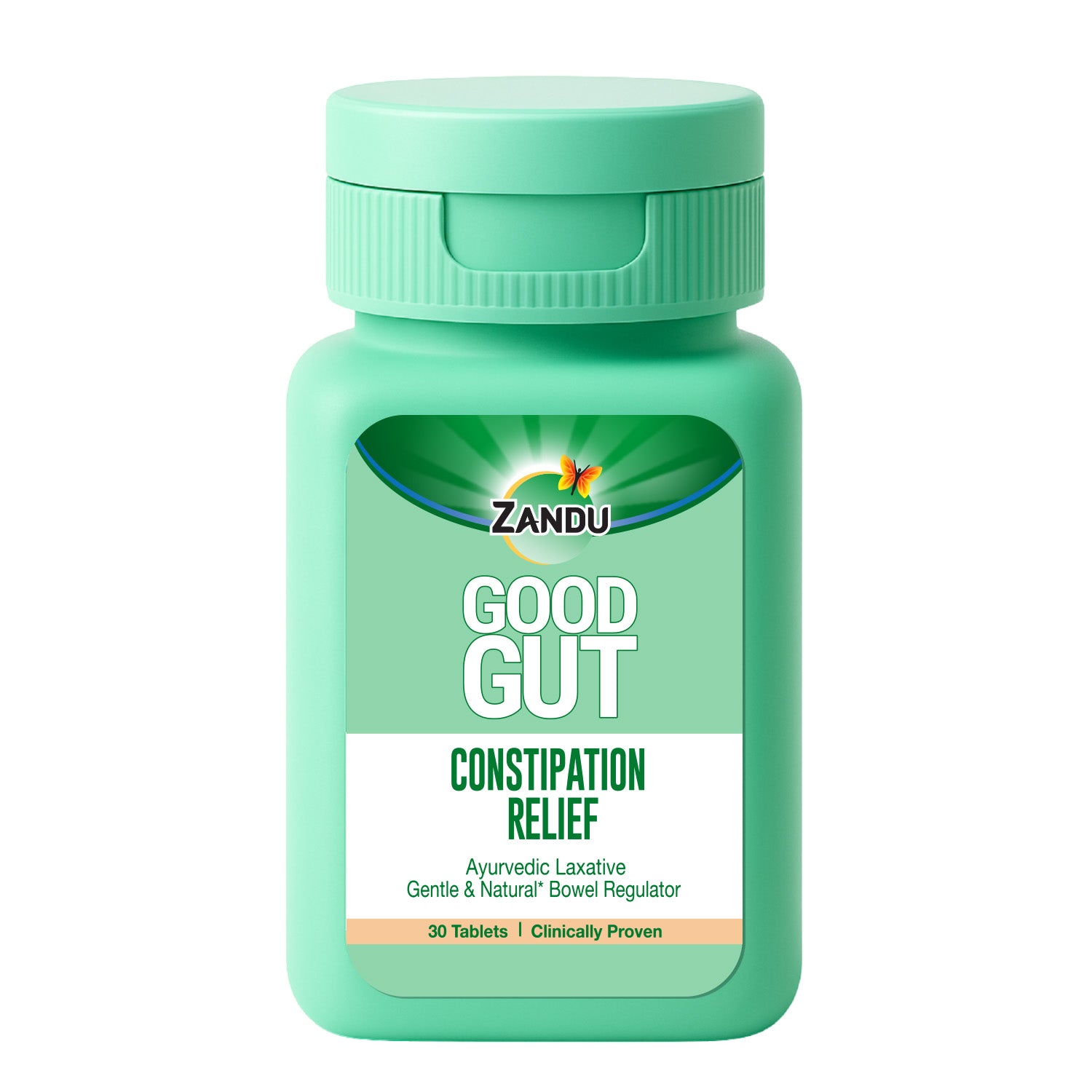
If your stool is brown but hard and difficult to pass, Zandu Constipation Relief Tablets, made with 8 Ayurvedic herbs, are taken as one tablet at bedtime and are not habit-forming. Do not use them to hide warning signs like black, red or pale stool.
When to Worry About Stool Colour
One odd colour after a meal or a new medicine is rarely a problem. The colour should return to brown once the cause has gone.
Go to an emergency room if you have:
- Black, sticky, tarry stool with a foul smell
- A lot of blood or clots in your stool
- Stool changes with dizziness, fainting, a racing heart or vomiting blood
- Severe belly pain
See a doctor soon if you have:
- Red or maroon stool: you cannot link it to food
- Pale, white or clay-coloured stool, especially with yellow skin or eyes
- Yellow, greasy stool that floats and keeps coming back
- Any unusual colour lasting more than a few days with no clear reason
- Diarrhoea for more than 3 days, or with fever
- Weight loss without trying or belly pain that does not go away
- Any change in colour, shape or how often you go that lasts 2 weeks or more
Your doctor will ask what you ate, what medicines and supplements you take, and how long the change has lasted. They may test a stool sample for blood or infection and order blood tests or a scope if needed.
Conclusion
Normal stool colour is brown, in shades from light tan to dark brown, and sometimes greenish. Food, iron, bismuth medicines and how fast stool moves can change the shade for a day or two without harm.
Black and tarry, bright red or maroon, pale or clay-coloured, and yellow and greasy stool are the colours that need a doctor, especially when they come with pain, dizziness, weight loss or yellow skin. In babies, pale stool needs a doctor quickly.
References
These are the studies and medical sources used in this article.
- Assessment of normal bowel habits in the general adult population: the Popcol study.
- The Vampire Study: Significant elevation of faecal calprotectin in healthy volunteers after 300 ml blood ingestion mimicking upper gastrointestinal bleeding.
- Screening for biliary atresia by infant stool color card in Taiwan.
- BilR is a gut microbial enzyme that reduces bilirubin to urobilinogen.
- The Characterization of Feces and Urine: A Review of the Literature to Inform Advanced Treatment Technology.
- Adverse events with bismuth salts for Helicobacter pylori eradication: systematic review and meta-analysis.
- Stool form scale as a useful guide to intestinal transit time.
- Does this patient have a severe upper gastrointestinal bleed?
- AGA Clinical Practice Update on the Epidemiology, Evaluation, and Management of Exocrine Pancreatic Insufficiency: Expert Review.
- Bowel function in a prospective cohort of 1052 healthy term infants up to 4 months of age.
- Stool color card screening for biliary atresia.
- What Does My Stool (Poop) Color Mean?
- What Do Different Poop Colors Mean? 2026.
- What does your poop say about your health?
- Types of Poop, Color Chart, and What They Mean.
- Bristol Stool Chart.
- The defecation pattern of healthy term infants up to the age of 3 months.
Written by

Zanducare
India’s trusted name in Ayurvedic wellness, offering time-tested solutions for today’s health and lifestyle needs. With formulations rooted in classical Ayurvedic texts and crafted using pure natural ingredients, we bring holistic care into your everyday routine.
Research by


Leave a comment
This site is protected by hCaptcha and the hCaptcha Privacy Policy and Terms of Service apply.