















How Many Times a Day Should You Poop to Be Healthy? Healthy Bowel Frequency Explained
Anywhere from three bowel movements a day to three a week is considered normal for adults. Most healthy people go once or twice a day, but there is no single right number. What matters more is that your pattern stays steady and your stool is soft, formed and easy to pass.
So if you are wondering how often should you poop, start by looking at your own usual pattern and not someone else's. A sudden change from your usual pattern, hard or watery stools, or straining every time tells you more about your gut than the number of trips alone.
What Studies Say About Normal Bowel Movement Frequency?
The "three a day to three a week" rule comes from studies of healthy adults. Here is what they found about normal bowel movement frequency.
- The 3-and-3 rule holds up: In a Swedish study, 268 randomly chosen adults kept a bowel diary for a week and had a colonoscopy. Among the healthy ones, 98% went between three times a day and three times a week.
- The same range shows up in a larger group: A US study of 4,775 adults with normal bowel habits found that 95.9% had between 3 and 21 bowel movements a week.
- Once a day is the most common pattern: In a survey of more than 2,000 people, almost half pooped once a day, and 28% went twice a day. Only 5.6% went just once or twice a week. Most people (61.3%) usually went in the morning.
- Some straining is normal too: In the Swedish study, 47% of people had some straining, and 46% sometimes felt they hadn't fully emptied their bowels. The researchers said a small amount of this should be seen as normal.
Does Pooping Less Often Affect Your Health?
Going less often may affect more than just your gut. Here is what research shows.
Long Gaps Let Gut Toxins Build Up

A 2024 study looked at more than 1,400 healthy adults. People who pooped once or twice a day had the most fibre-eating gut bacteria, which are linked with good health. Researchers called this range a "Goldilocks zone."
In people with constipation, the gut bacteria had run out of fibre and started breaking down protein instead. This makes toxins. One of these toxins, indoxyl sulphate, was found at higher levels in their blood and was linked with weaker kidney function. People with diarrhoea had higher blood markers linked with liver damage. People who ate more fibre, drank enough water and exercised were more likely to be in the healthy range.
The same study found that younger people, women and people with a lower body weight tended to poop less often.
Piles And Tears From Straining
The longer stool stays in the gut, the harder it gets, and the more you push. A 2015 study of 2,813 adults found that people with constipation were more likely to have piles. Passing hard stools and straining can also cause small, painful tears near the anus, called anal fissures.mayoclinic.org
Stool Getting Stuck
When constipation goes on for a long time, a large lump of dry, hard stool can get stuck in the rectum. This is called faecal impaction, and it can cause cramps, bloating and leaking of watery stool. Once this happens, it's very unlikely that the stool will pass on its own.
Rectal Prolapse
Straining again and again may raise the risk of rectal prolapse. This is when part of the rectum slips out through the anus.mayoclinic.org Chronic constipation and straining are listed among its possible causes.niddk.nih.gov
Bladder Trouble
The bowel and bladder sit close together, so a full bowel can press on the bladder. A 2018 study of 516 women found that constipation was linked with an overactive bladder. In a study of 52 older adults, treating constipation meant fewer people dealt with urgency, frequent urination and burning while urinating.pubmed.ncbi.nlm.nih.gov
Low Mood
A UK study of 449,459 people found that those with constipation had a 2.28 times higher risk of developing depression over about 12 years.pubmed.ncbi.nlm.nih.gov A US study that defined constipation as fewer than three bowel movements a week found a similar link with major depression.pubmed.ncbi.nlm.nih.gov
A Possible Link with Heart Health

A Japanese study of 45,112 adults found that people who went once every 2-3 days had a 21% higher risk of dying from heart disease than people who went daily. The risk was 39% higher for people who went once every 4 days or less. This shows a link, not proof that one causes the other.
Lower Quality of Life
In a French study of 1,673 people with long-term constipation, those who went once a week or less were 3.5 times more likely to report poor quality of life. Another study found people with chronic constipation missed more work and got less done while at work.
It May Be Linked to Acidity and Other Digestive Problems
When you go less often, stool sits in the gut longer and gets hard. That can lead to more than constipation. Constipation can also cause stomach ache, cramps, bloating, nausea and loss of appetite.
Acidity often shows up alongside it. A Japanese survey of 10,000 people found that people with acid reflux (GERD) were about 1.5 to 2.7 times more likely to be constipated. People who had both problems had worse reflux symptoms and a lower quality of life.
A Korean study of 759 people with constipation found that about 18% also had acid reflux and about 10% had ongoing indigestion. Low fibre intake was one of the factors linked with having these problems together.
In a study of children with constipation, treating the constipation reduced acid reflux and its symptoms.
These studies show a link. They don't prove that pooping less often causes acidity.
Bowel Movement Frequency: What Each Pattern Means
Your bowel movement frequency is only one clue. This table shows what different patterns usually mean when your stool looks normal.
|
How often you go |
What it usually means |
|
1 to 3 times a day |
This is the most common healthy pattern. In one large study, this range was linked with the healthiest mix of gut bacteria. |
|
Once every day at about the same time |
This is a steady, healthy routine, as long as your stool is soft and easy to pass. |
|
Once every 2 days |
This is still normal for many people if the stool is soft and you don't strain. |
|
3 times a week |
This is the lower end of normal. It is fine if it has always been your pattern and you feel comfortable. |
|
Fewer than 3 times a week |
This may be constipation, especially if your stools are hard, dry or painful to pass. |
|
More than 3 times a day |
This may be diarrhoea if the stool is loose or watery. If it is formed, it may come from eating more fibre or drinking more coffee. |
|
A sudden change from your usual pattern |
Something in your diet, routine, medicines or health has changed. If it lasts more than a week, talk to a doctor. |
|
Waking up at night to poop |
This is not typical and is worth checking with a doctor. |
What Healthy Bowel Movements Look Like?
How often you go is only half the story. Healthy bowel movements also have the right shape, colour and ease.
Research by Zandu Care found that a daily toilet visit doesn't mean your gut is healthy. Nearly 1 in 2 people who go every day still struggle to fully empty their bowels, and more than half still feel food sitting in their stomach hours after eating.
Poop Shape and Texture
Doctors use the Bristol stool chart to describe poop in 7 types. A study of 66 volunteers found that stool shape showed how fast food moved through the gut better than the number of times people went.
|
Type |
What it looks like |
What it means |
|
Type 1 |
Small, hard lumps like pebbles |
Constipation |
|
Type 2 |
A lumpy, sausage-shaped log |
Mild constipation |
|
Type 3 |
A sausage shape with cracks on the surface |
Normal |
|
Type 4 |
A smooth, soft sausage or snake shape |
Normal and ideal |
|
Type 5 |
Soft blobs with clear edges |
Food is moving a little fast and you may need more fibre |
|
Type 6 |
Mushy pieces with ragged edges |
Mild diarrhoea |
|
Type 7 |
Fully watery with no solid pieces |
Diarrhoea |
Colour
Healthy poop is usually some shade of brown. Green poop is often from leafy vegetables or food colours. Black poop can come from iron tablets, but it can also mean bleeding in the upper gut. Red poop can come from beetroot, but it can also be blood. Pale or white poop may mean a problem with bile. If you can't explain an unusual colour by what you ate or a medicine you took, see a doctor.
Time, Size and Smell
A bowel movement should take only a few minutes, not more than 10 to 15. Stools are usually a few inches long. Very thin, pencil-like stools that keep happening are worth checking. Most poop sinks. Poop that often floats, looks greasy and smells very bad may mean your body isn't absorbing fat properly.
Why Your Poop Frequency Changes
Your pattern can shift from week to week. These are the most common reasons.
- Fibre: More whole grains, dal, fruit and vegetables usually means more regular bowel movements. Less fibre slows things down.
- Water: When you are short on fluid, your gut pulls more water out of the stool and makes it hard.
- Activity: Moving your body helps push food through your gut. Sitting all day slows it.
- Age: Older adults are more prone to constipation because the gut moves more slowly, they tend to move less, and they often take more medicines.
- Coffee and tea: Coffee, even decaf, can make you poop more often.
- Stress: Your gut and brain are closely linked. Stress can cause loose motions in some people and constipation in others.
- Medicines and supplements: Iron, painkillers and some antidepressants can cause constipation. Magnesium, vitamin C and antibiotics can make you go more often.
- Periods and pregnancy: Hormone changes around your period often make you poop more.
- Travel and routine changes: A new place, new food or a changed sleep time can throw off your pattern for a few days.
- Illness: A stomach bug, food intolerance, an overactive thyroid, IBS or inflammatory bowel disease can all change how often you go.
Signs of Healthy Poop Frequency
A healthy gut doesn't mean going a set number of times. These are the signs of healthy digestion to look for:
- You poop on a fairly regular schedule, whatever your normal is.
- Your stool is type 3 or 4 on the Bristol chart most of the time.
- You go within a few minutes without heavy straining.
- You usually feel empty afterwards.
- You don't have pain, a lot of bloating when you go.
- You don't feel heavy and full for hours after meals.
If your stomach often feels heavy, bloated and sluggish after outside food, irregular meals or stress, Zandu Good Gut Cleanse & Detox Shots are made for this kind of lifestyle-led gut trouble. They are not meant for sudden acidity attacks or severe constipation.
How to Keep Your Bowel Movements Regular
Small daily habits make the biggest difference to how often and how easily you go.
- Eat about 25 g of fibre a day: Gut doctors recommend this amount. Add dal, chana, whole wheat roti, oats, vegetables, fruit and seeds throughout the day.
- Drink about 2 litres of water a day: In a 2-month trial, 117 adults with long-term constipation ate about 25 g of fibre a day. The group that also drank 2 litres of water a day went more often and used fewer laxatives than the group that drank as usual.
- Move every day: Even a 10 to 15-minute walk helps food move through your gut.
- Don't hold it in: When you ignore the urge, your body pulls more water out of the stool, and it gets harder to pass.
- Keep a fixed toilet time: Many people find it easiest to go after breakfast. Sit for a few relaxed minutes at the same time each day.
- Eat at regular times: Having breakfast within an hour of waking and not eating dinner too close to bedtime keeps your digestion on schedule.
- Manage stress: Breathing exercises, yoga or a short walk can calm a gut that reacts to stress.
Fermented foods help, but they don't do the job alone. Research by Zandu Care found that among people who eat fermented foods, 3 in 5 still struggle to have complete bowel movements regularly, and more than half still don't have smooth, easy stools.
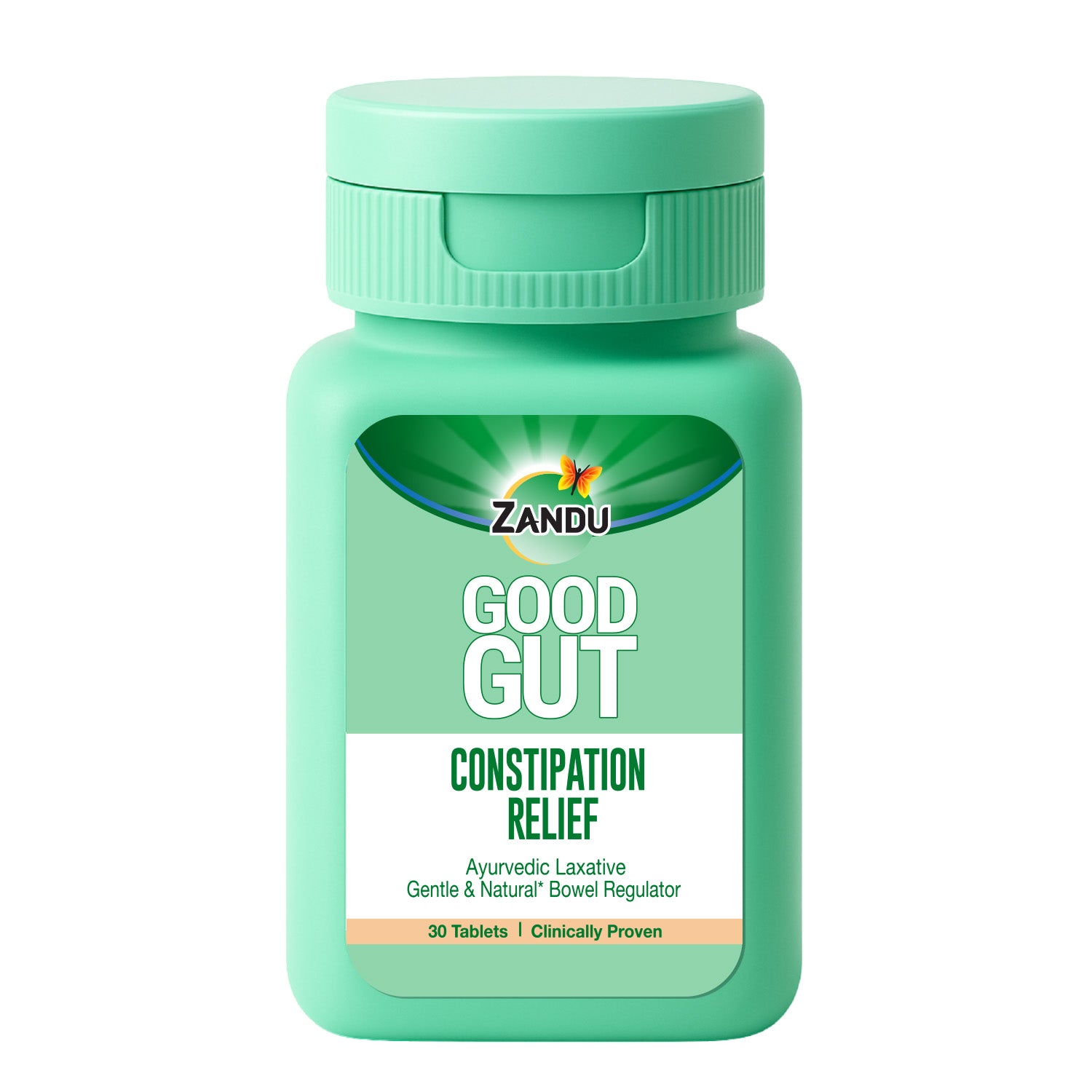
If you still have hard stools, strain or go 1 to 2 days without a bowel movement, Zandu Good Gut Constipation Relief Tablets are made for these constipation episodes. Take them as directed on the pack.
When to See a Doctor
Everyone's pattern changes now and then. But talk to a doctor if:
- A change in your bowel habits lasts more than a week.
- You often need laxatives to go.
- You go fewer than 3 times a week with hard, painful stools.
- You have loose stools more than 3 times a day for several days.
- You wake up at night to poop.
Get medical help right away if you see blood in your stool, have black or tarry stools, lose weight without trying, feel very weak or tired from low blood (anaemia), or have severe stomach pain, fever or vomiting along with the change.
Conclusion
Pooping anywhere from three times a day to three times a week is normal, and once or twice a day is the most common pattern. Studies suggest that going 1 to 2 times a day may be linked with the healthiest gut bacteria. Still, the number matters less than your own steady pattern and how easily you go.
Soft, formed stools that pass in a few minutes are a good sign. To keep your bowels regular, eat enough fibre, drink enough water, stay active and don't ignore the urge. See a doctor if your pattern changes for more than a week or if you notice blood, weight loss or severe pain.
References
These are the studies and expert sources used in this article.
- Assessment of normal bowel habits in the general adult population: the Popcol study. Scandinavian Journal of Gastroenterology.
- Characterizing Normal Bowel Frequency and Consistency in a Representative Sample of Adults in the United States (NHANES). American Journal of Gastroenterology.
- Aberrant bowel movement frequencies coincide with increased microbe-derived blood metabolites associated with reduced organ function. Cell Reports Medicine.
- Defecation frequency and cardiovascular disease mortality in Japan: The Ohsaki cohort study. Atherosclerosis.
- Bowel Movement Frequency, Laxative Use, and Mortality From Coronary Heart Disease and Stroke Among Japanese Men and Women: The JACC Study. Journal of Epidemiology.
- Stool form scale as a useful guide to intestinal transit time. Scandinavian Journal of Gastroenterology.
- Blue poo: impact of gut transit time on the gut microbiome using a novel marker. Gut.
- Water supplementation enhances the effect of high-fiber diet on stool frequency and laxative consumption in adult patients with functional constipation. Hepatogastroenterology.
- Healthline. How Many Times Should You Poop a Day?
- Cleveland Clinic. Frequent Bowel Movements.
- HealthPartners. Healthy poop chart.
- How often should you poop?
- Henry Ford Health. How Often Should You Poop?
- Institute for Systems Biology. Timing is Everything: ISB Study Finds Link Between Bowel Movement Frequency and Overall Health.
Written by

Zanducare
India’s trusted name in Ayurvedic wellness, offering time-tested solutions for today’s health and lifestyle needs. With formulations rooted in classical Ayurvedic texts and crafted using pure natural ingredients, we bring holistic care into your everyday routine.
Research by




Leave a comment
This site is protected by hCaptcha and the hCaptcha Privacy Policy and Terms of Service apply.