







Article: The 15-Day Gut Reset Plan: Indian Diet, Ayurvedic Tips & Day-by-Day Steps for Better Digestion
The 15-Day Gut Reset Plan: Indian Diet, Ayurvedic Tips & Day-by-Day Steps for Better Digestion
In one of the studies, people who switched to a high-fibre, low-fat diet for just two weeks had less inflammation in their colon and more butyrate, a compound that protects the gut lining. Harmful bile acids in their colon also fell by about 70%.
That is what a real stomach cleanse detox looks like: not laxatives or juice, but 15 days of the right food in three phases. Days 1 to 5 clear out sugar, fried and packaged food; days 6 to 10 rebuild healthy bacteria with fibre and fermented foods like dahi, chaas and kanji; days 11 to 15 lock in the habits. Most people notice less bloating and more regular bowel movements by day 15, while any quick weight drop is mostly water.
This guide walks you through each day, with an Indian meal plan, Ayurvedic gut cleansing tips, and what to honestly expect.
Is a 15-Day Gut Reset a Real Detox?
Yes, but not in the way most "detox" products claim. Your liver, kidneys and gut already remove waste every day. You don't need to flush them with teas or powders.
What a gut reset does is stop overloading your gut and start feeding the good bacteria that keep it healthy. Cleanses have not been shown to help people with a healthy liver and kidneys, and laxative products can cause dehydration.
So think of the process as cleaning up your plate, not cleaning out your intestines.
Why 15 Days and Not 3 or 7?
Your gut bacteria start changing within a day of a new diet, according to a 2014 study in Nature. But that same study found that they return to their old pattern within two days of returning to their old habits.
Fifteen days gives you enough time to:
- Get past the first few days of extra gas as your gut adjusts to more fibre
- See real changes in bloating and bowel movements
- Build habits that are more likely to stick
The two-week diet swap study above also showed measurable changes inside the colon in the same time frame.
Who Should Not Try a Gut Cleanse at Home?
Talk to a doctor or nutritionist first if you:
- Are pregnant or breastfeeding
- Have diabetes, kidney disease, thyroid problems or heart disease
- Have IBS, IBD (Crohn's or ulcerative colitis) or coeliac disease
- Take regular medicines, especially for blood sugar or blood pressure
- Have a history of eating disorders
- Are underweight or recovering from illness or surgery
What Should I Do Before Day 1?
- Note your symptoms: Write down how often you feel bloated, your bowel habits, and your energy and sleep. You'll compare on day 15.
- Clear your kitchen: Remove biscuits, namkeen, sugary drinks, instant noodles and packaged snacks.
- Stock up: Moong dal, rice, oats, millets, seasonal vegetables, fruits, curd, jeera, ajwain, saunf, ginger and ghee.
- Fix your sleep time: Aim for 7 to 8 hours and a fixed bedtime.
How Does the 15-Day Gut Reset Work, Day by Day?
The plan has three phases. Each phase builds on the one before, so follow them in order.
|
Phase |
Days |
Goal |
|
Clear out |
1 to 5 |
Give your gut a break from sugar, fried and packaged food. |
|
Rebuild |
6 to 10 |
Feed good bacteria with fibre and fermented foods. |
|
Strengthens |
11 to 15 |
Build a routine and test which foods suit you. |
What Rules Do I Follow on All 15 Days?
These apply every single day, from day 1 to day 15:
- Drink a glass of warm water as soon as you wake up.
- Eat three meals at fixed times. Finish dinner by 8 p.m.
- Drink 8 to 10 glasses of water through the day.
- No sugar, maida, fried food, packaged snacks, alcohol or fizzy drinks.
- Limit tea or coffee to one cup a day, before 4 p.m.
- Walk for 10 minutes after lunch and after dinner.
- Sleep 7 to 8 hours and be in bed by 11 p.m.
Phase 1: Days 1 to 5 (Clear Out)
Day 1: Remove sugar and packaged food
- Breakfast: Vegetable dalia
- Lunch: Moong dal, rice, lauki sabzi
- Evening: One seasonal fruit, such as papaya or apple
- Dinner: Moong dal khichdi with 1 tsp ghee
- Task: Score your bloating, bowel habits and energy from 0 to 10. You will compare these on day 10 and day 15.
Day 2: Cut fried food and maida, and start jeera water.
- Make jeera-ajwain-saunf water: Boil half a teaspoon each of jeera, ajwain and saunf in two glasses of water for 5 minutes. Strain and sip it warm through the morning.
- Breakfast: Idli with sambar
- Lunch: Roti, dal, bhindi or tinda sabzi
- Evening: A small bowl of roasted makhana
- Dinner: Vegetable soup with khichdi
Day 3: Fix your meal times.
- Eat at the same times you will follow for the rest of the plan.
- Before lunch, chew a thin slice of ginger with a pinch of rock salt to boost appetite.
- Breakfast: Vegetable poha
- Lunch: Dal, rice, sabzi, cucumber slices
- Evening: Coconut water
- Dinner: Lauki and moong dal soup
- Note: A mild headache or sugar cravings are common today. They pass in a day or two.
Day 4: Focus on water.
- Keep a bottle with you and finish 8 to 10 glasses by evening.
- Breakfast: Vegetable upma
- Lunch: Roti, dal, mixed vegetable sabzi
- Evening: One fruit
- Dinner: Moong dal khichdi with jeera tadka
Day 5: Light khichdi day.
- Ayurveda uses a simple khichdi day to rest digestion.
- Breakfast: Vegetable dalia
- Lunch and dinner: Moong dal khichdi with vegetables, 1 tsp ghee and jeera
- Evening: Jeera water or coconut water
- If you have diabetes or feel weak, skip this meal and repeat day 4 instead.
Phase 2: Days 6 to 10 (Rebuild)
Day 6: Add one fermented food.

- Add a bowl of dahi or a glass of chaas at lunch.
- Start a batch of kanji today so it is ready by day 9. Cut 2 black carrots or 1 beetroot into sticks and put them in a glass jar with 1 litre of water, 1 tbsp mustard (rai) powder and 1 tsp salt. Keep it in the sun for 3 to 4 days and stir once a day.
- Breakfast: Vegetable dalia
- Lunch: Dal, rice, sabzi, dahi
- Evening: One fruit
- Dinner: Khichdi with vegetables
Day 7: Add whole grains.
- Breakfast: Oats cooked with 1 tbsp ground flaxseed
- Lunch: Jowar or bajra roti, dal, sabzi, chaas
- Evening: A small handful of roasted chana
- Dinner: Vegetable soup with one millet roti
Day 8: Add beans and chana.
- Soak rajma or chana overnight and pressure-cook well. Add hing and jeera to the tadka to reduce gas.
- Breakfast: Besan chilla with mint chutney
- Lunch: Half a katori of rajma or chana, roti, salad, dahi
- Evening: One fruit
- Dinner: Moong dal khichdi
Day 9: Add prebiotic foods.
- Add raw onion salad at lunch, garlic in your tadka and 1 tbsp flaxseed in any meal.
- Have a small glass of kanji with lunch.
- Breakfast: Oats or dalia
- Lunch: Roti, dal, raw banana sabzi, onion salad, kanji
- Evening: A few soaked almonds
- Dinner: Vegetable soup with millet roti
Day 10: Add variety and check in.
- Count how many different plant foods you have eaten since day 6. Aim for 20 or more.
- Score your bloating, bowel habits and energy again and compare with day 1.
- Meals: Repeat any day from this phase, but try one new vegetable or dal today.
Phase 3: Days 11 to 15 (Strengthen)
Keep eating as you did in phase 2. Now add these steps, one per day.
Day 11: Start 30 minutes of daily exercise.
- Brisk walking, cycling, swimming or yoga all work. Keep it up for the rest of the plan and beyond.
Day 12: Calm your stress and sleep.
- Do 10 minutes of slow breathing: breathe in for 4 counts and out for 6.
- Switch off screens an hour before bed.
Day 13: Reintroduce one food.
- Add back one food you cut down on, such as paneer, at lunch.
- Watch how you feel for the next 24 hours. Note any gas, heaviness or change in bowel habits.
Day 14: Reintroduce a second food.
- Add back another food you missed, such as your usual cup of tea or a small homemade sweet.
- Again, note how you feel over the next day.
Day 15: Review and plan ahead.
- Score your symptoms one last time and compare with day 1 and day 10.
- Pick the five habits that helped you most and keep them going.
- Keep any food that caused symptoms on days 13 and 14 to small amounts.
What Does Ayurveda Say About Gut Cleansing?

In Ayurveda, optimal health starts with agni, your digestive fire. When agni is weak, food is not fully digested and forms ama, a sticky residue linked to heaviness, gas, and low energy. Ayurvedic gut cleansing aims to clear ama and rekindle agni.
Simple Ayurvedic gut cleanse habits you can follow at home:
- Warm water throughout the day instead of cold water.
- A thin slice of ginger with a pinch of rock salt before lunch to boost appetite.
- Khichdi as a light, easy-to-digest meal in the first phase.
- Takra (spiced buttermilk) after lunch.
- Eating your largest meal at midday, when agni is strongest.
Deeper cleansing therapies like virechana (therapeutic purging) are part of Panchakarma and should only be done under a qualified Ayurvedic doctor.
How Ayurveda Can Help with Stomach Cleaning?
Zandu’s Good Gut range is built on Ayurvedic herbs traditionally used for digestion. Speak to a qualified Ayurvedic doctor before you start any of them.
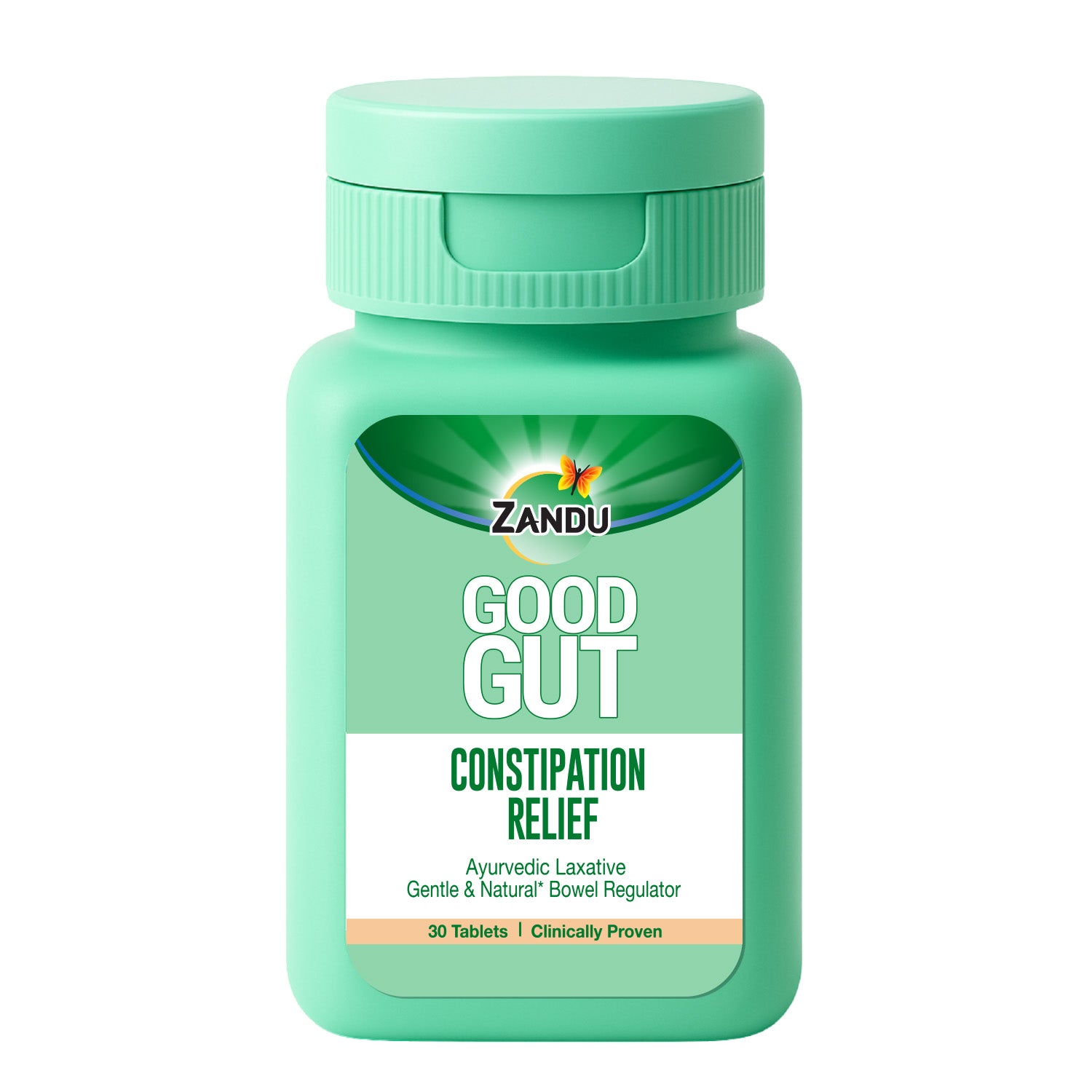
- Zandu Constipation Relief Tablets: For hard stools, going a day or two without a bowel movement, or never feeling fully cleared out. They combine triphala, haritaki, svarnapatri (senna), and castor oil, herbs traditionally taken at night for constipation. A 2017 review found some clinical support for triphala in bowel health, though the studies are small. Take one tablet at bedtime with water.
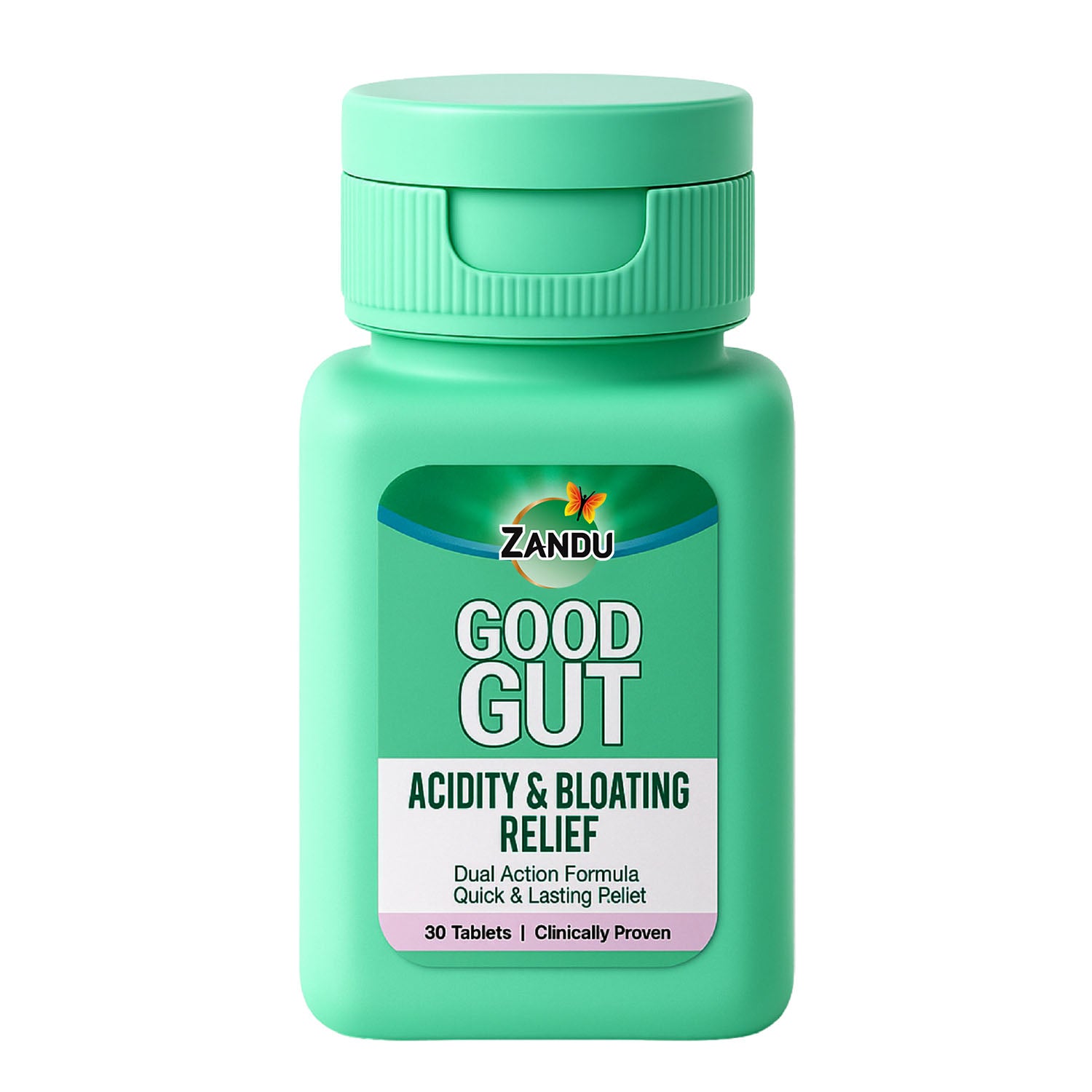
- Zandu Good Gut Acidity & Bloating Relief Tablets: For burning after spicy food, chai or late dinners, sour burps, and needing an antacid again and again. They contain muktashukti bhasma (pearl oyster) and GutGard® yashtimadhu, a liquorice extract tested in a small trial for indigestion. Take one tablet before lunch and one before dinner.
- Zandu Good Gut Detox Shots: For a stomach that feels heavy, gassy or bloated by evening or sluggish after a weekend of eating out. It’s a fermented Ayurvedic tonic (asava-arishta) made with ajwain, lavang (clove), triphala and draksha, among 35 herbs. Take two shots a day after meals, as a 45-day course.
Two safety points matter here. First, avoid triphala and other herbal laxatives during pregnancy, diarrhoea or an IBD flare. Second, buy only from licensed brands like Zanducare that test their products. A 2008 study in JAMA found that about 1 in 5 Ayurvedic products bought online contained lead, mercury or arsenic.
What Will I Notice after 15 Days: Less Bloating or Only Weight Loss?
There are no published studies on branded 15-day Indian gut programmes, so be careful of before-and-after claims. Based on what short diet studies show, here is what you can honestly expect:
- Less bloating and heaviness: This is the most common change, usually from week two.
- More regular bowel movements: Thanks to more fibre and water.
- Fewer sugar cravings: As sugar leaves your diet.
- Better energy and sleep: From regular meal times and lighter dinners.
- Some weight loss: Usually 1 to 2 kg, but much of it is water, with less salt and less food in the gut, not fat.
If your only result is weight loss and your bloating hasn't changed, your gut issue may need a closer look.
Why Do I Feel Worse in the First Few Days?
It's common to feel more gassy, tired or irritable on days 2 to 4. This happens because:
- Your gut bacteria are adjusting to the extra fibre you’re now eating.
- You've cut back on sugar and caffeine.
- Your meal timing has changed.
It usually settles within a week. Soak and pressure-cook dals, add fibre slowly and drink more water. If you get severe pain, vomiting or blood in your stool, stop and see a doctor.
Do I Need a Nutritionist for a Personalised Gut Reset?
Not always. If you're healthy and only want to feel lighter, the plan above is a good start. A personalised 15-day gut reset with a nutritionist is more helpful if you:
- Have IBS, PCOS, diabetes or thyroid problems
- Get bloated even on healthy food
- Have tried general plans without results
- Have food intolerances you can't pin down
A good nutritionist in India will ask for a food and symptom diary, adjust fibre and FODMAP foods to your gut, and build meals around your regional food habits, whether that's rice and sambar or roti and sabzi. Be wary of any programme that pushes laxative teas, extreme calorie cuts or costly supplements.
What Should I Avoid During a Stomach Cleanse Detox?
- Laxative or "detox" teas: They cause dehydration and loss of salts.
- Juice-only cleanses: They remove fibre and are high in sugar.
- Colon cleanses and enemas at home: They can harm the gut lining and good bacteria.
- Long fasts: They leave you tired and often lead to overeating after.
- Too much fibre at once: It causes gas and cramps.
When Should I Stop and See a Doctor?
See a doctor if you notice:
- Blood in your stool or black stools
- Weight loss you can't explain
- Severe or constant stomach pain
- Vomiting or trouble swallowing
- Diarrhoea or constipation lasting more than two weeks
These need medical tests, not a diet change.
Conclusion
A 15-day gut reset works when it is about food and habits, not quick flushes. Spend the first five days clearing out sugar and processed food, the next five feeding your gut with fibre and fermented foods, and the last five building a routine you can keep.
Ayurvedic gut cleansing habits like warm water, khichdi and buttermilk fit in naturally, and remedies like triphala or isabgol can help when used with proper guidance.
Expect less bloating and more regular digestion by day 15, not dramatic weight loss. Keep going after day 15, and get a nutritionist or doctor involved if your symptoms don't improve.
Written by

Zanducare
India’s trusted name in Ayurvedic wellness, offering time-tested solutions for today’s health and lifestyle needs. With formulations rooted in classical Ayurvedic texts and crafted using pure natural ingredients, we bring holistic care into your everyday routine.
Research by


Leave a comment
This site is protected by hCaptcha and the hCaptcha Privacy Policy and Terms of Service apply.